
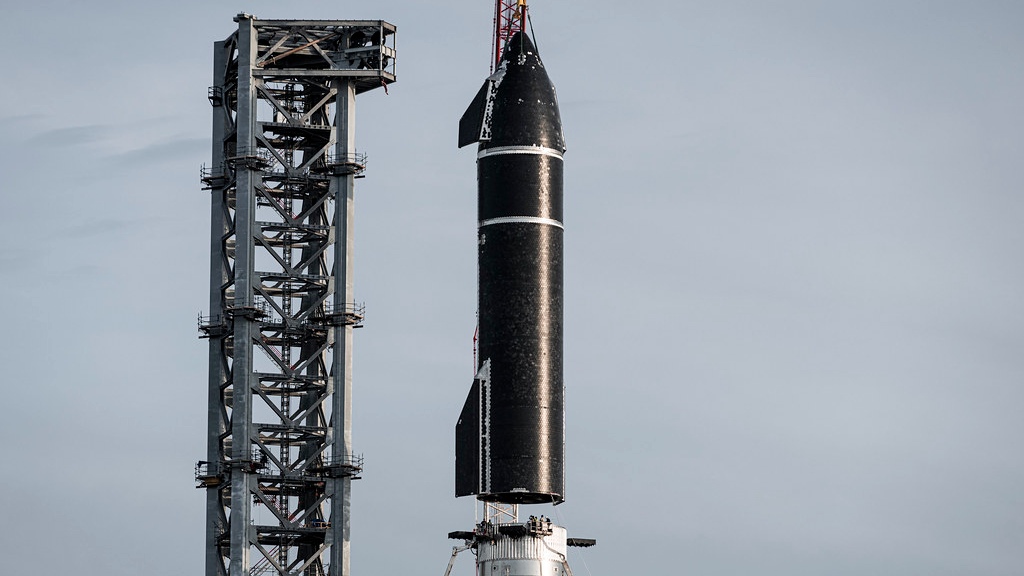
First SpaceX Super Heavy V3 Catching Confirmed! Totally Turns Starship Program Up a Notch: The global space industry is entering a new era where fully reusable rockets, advanced lunar missions, and commercial space infrastructure are replacing one-off experimental launches. At the center of this transformation is SpaceX’s Starship V3, a next-generation launch system designed to make spaceflight faster, cheaper, and more reliable than ever before.
After months of anticipation, the upcoming Super Heavy Booster V3 catching system has become one of the most exciting milestones in modern aerospace engineering. Combined with major changes to NASA’s Artemis program, expansion to Florida’s Space Coast, and plans for future orbital habitats, Starship is rapidly evolving into the backbone of humanity’s long-term presence in space.
In this article, we’ll explore how Starship V3 is redefining rocket recovery, lunar exploration, and the future of orbital transportation.
Why Starship V3 Is a Major Leap Forward
Unlike earlier Starship prototypes that focused on testing fundamental technologies, Starship V3 has been engineered with operational efficiency in mind. Previous versions successfully demonstrated groundbreaking achievements, including hot staging, controlled atmospheric re-entry, and even the spectacular recovery of the Super Heavy booster using the launch tower’s mechanical arms.
Now, SpaceX is refining those achievements into a system capable of supporting routine, rapid, and highly reliable launches.
Instead of proving concepts, Starship V3 aims to make reusable spaceflight an everyday reality.
Engineering Upgrades Behind the Super Heavy V3 Catch
One of the biggest engineering improvements in Booster V3 is its redesigned recovery system.
Earlier booster versions used four relatively small grid fins alongside separate catch pins that allowed the launch tower’s “chopsticks” to grab the returning rocket.
SpaceX has now simplified that design significantly.
Three Larger Grid Fins
Booster V3 replaces the older four-fin configuration with three much larger grid fins positioned lower on the vehicle.
This redesign offers several advantages:
- Better aerodynamic control
- Improved structural strength
- Reduced exposure to intense heat during hot staging
- Greater stability during descent
The larger fins allow more precise steering while also improving the booster’s ability to survive repeated flights.
Integrated Catch Points
Perhaps the most innovative change is the elimination of dedicated catch pins.
Instead, the catch points are now built directly into the grid fins themselves.
This seemingly simple modification provides multiple benefits:
- Lower overall vehicle mass
- Fewer mechanical components
- Reduced maintenance
- Stronger load distribution during recovery
- Lower risk of mechanical failure
By integrating multiple functions into one structural component, SpaceX continues its philosophy of simplifying rocket design without sacrificing performance.
Improved Raptor Engines
The upgraded Raptor engines also play an essential role in successful booster recovery.
These engines now provide:
- More accurate throttle control
- Cleaner shutdown sequences
- Higher thrust efficiency
- Better precision during the final landing burn
Because the booster must slow down within seconds before being captured by the launch tower, engine precision is absolutely critical.
Mechazilla Has Become Smarter and Faster
The launch tower—popularly known as Mechazilla—has received major upgrades alongside Booster V3.
Instead of relying on older hydraulic systems, SpaceX has installed modern electromechanical actuators.
This provides:
- Faster response times
- More accurate movement
- Reduced maintenance requirements
- Improved reliability
The famous chopsticks have also been shortened, making them lighter and quicker to reposition.
These improvements allow the tower to begin its capture sequence earlier, increasing the size of the booster’s recovery window.
Even small variations caused by wind or engine performance become easier to accommodate.
The overall objective is simple:
Turn booster catching from a spectacular engineering demonstration into a routine operational procedure.
Starship Is Becoming the Core of NASA’s Artemis Program
Perhaps the biggest surprise in recent months has been Starship’s expanding role inside NASA’s Artemis program.
Originally, Starship served primarily as the Human Landing System (HLS) responsible for taking astronauts from lunar orbit to the Moon’s surface.
However, mission architecture has evolved considerably.
Instead of meeting Starship only near the Moon, astronauts may now transfer to Starship while still in Earth orbit.
This fundamentally changes how future lunar missions will operate.
Earth Orbit Rendezvous
Under the revised concept:
- Astronauts launch aboard Orion using the Space Launch System (SLS).
- Orion docks with Starship in Earth orbit.
- Starship performs the powerful Trans-Lunar Injection (TLI) burn.
- Both spacecraft travel together toward the Moon.
Rather than acting solely as a lunar lander, Starship becomes the primary transportation vehicle for deep-space travel.
Why This New Architecture Makes Sense
Moving the docking operation closer to Earth provides several significant advantages.
Improved Crew Safety
Earth orbit offers far better emergency options than lunar orbit.
If docking problems occur, astronauts can safely return to Earth within hours rather than facing a dangerous emergency hundreds of thousands of kilometers away.
Safety has become one of the strongest arguments supporting this redesigned mission profile.
Reduced Refueling Requirements
Starship depends on orbital refueling before traveling beyond Earth.
A more efficient mission trajectory reduces the total amount of propellant needed.
That means:
- Fewer tanker launches
- Lower operational costs
- Less scheduling complexity
- Higher mission reliability
Better Division of Responsibilities
The updated architecture allows each spacecraft to focus on what it does best.
The SLS specializes in safely launching astronauts.
Meanwhile, Starship handles heavy cargo transportation, long-duration propulsion, and lunar operations.
Rather than competing, both vehicles complement one another.
Artemis 3 Will Validate the Future
Before these ambitious lunar missions become reality, NASA plans to validate many of the required technologies during Artemis 3.
Instead of immediately attempting every new capability simultaneously, NASA intends to gradually test hardware through multiple docking demonstrations.
The mission includes launches involving:
- Blue Origin
- NASA’s Orion spacecraft
- SpaceX Starship
Each vehicle contributes to testing critical systems needed for future Moon missions.
Blue Origin Pathfinder
A dedicated spacecraft launched aboard New Glenn will spend weeks in orbit collecting engineering data.
Engineers will evaluate:
- Thermal performance
- Structural durability
- Long-term spacecraft health
These tests reduce uncertainty before astronauts begin extended lunar operations.
Orion Docking Demonstration
Following launch aboard SLS, the Orion crew will dock with the waiting spacecraft and conduct extensive system evaluations.
Life-support systems, communications, docking mechanisms, and operational procedures will all undergo detailed testing.
Starship Pathfinder
Finally, Orion will dock with a Starship demonstration vehicle.
Although the visit is expected to last only about one day, it represents an extremely important milestone.
The mission validates:
- Docking interfaces
- Communication systems
- Structural compatibility
- Crew transfer procedures
Each successful demonstration reduces technical risk before astronauts eventually land on the Moon.
Florida Is Becoming SpaceX’s Second Starship Hub
While Starbase, Texas, remains the heart of Starship development, Florida is quickly becoming equally important.
SpaceX is heavily upgrading Launch Complex 39A at the Kennedy Space Center.
The launch site now includes a massive reinforced flame trench capable of handling the tremendous heat and acoustic energy generated by Starship’s powerful engines.
The company is also improving transportation logistics.
Large Starship components can now be shipped from Texas to Florida aboard specialized transport barges before final assembly.
Eventually, SpaceX plans to manufacture and launch Starships directly from Florida, creating a second high-frequency launch center capable of supporting rapid flight operations.
The Growing Importance of Sea-Based Spaceports
As global launch demand continues rising, land-based launch sites face increasing limitations.
Noise restrictions, environmental regulations, and public safety concerns make expansion difficult.
Floating offshore launch platforms offer a practical solution.
Companies including Lockheed Martin, Firefly Aerospace, and Seagate Space are developing mobile ocean-based launch systems designed for responsive space missions.
Operating from the ocean offers several advantages:
- Better launch positioning
- Increased payload capacity
- Flexible mission planning
- Reduced impact on populated areas
However, SpaceX remains the industry’s clear leader in maritime launch operations.
Its extensive experience recovering Falcon boosters on autonomous drone ships provides a strong foundation for future Starship ocean platforms.
If Starship eventually launches thousands of times annually, offshore launch facilities could become an essential part of global space transportation infrastructure.
Starship Could Replace the International Space Station
The International Space Station (ISS) is scheduled for retirement by 2030 after decades of continuous service.
Years of radiation exposure, thermal cycling, and structural aging have created increasing maintenance challenges.
NASA is therefore encouraging private companies to develop the next generation of orbital stations.
Several commercial concepts are already under development.
However, most rely on multiple launches followed by complex assembly in orbit.
Starship changes that equation completely.
Thanks to its enormous internal volume, a single Starship could deploy a fully functional orbital habitat in just one launch.
Instead of connecting dozens of smaller modules, engineers could transform a Starship into a massive research laboratory simply by replacing propellant tanks with living space.
Future concepts are even more ambitious.
Multiple Starships could connect together in a rotating ring, generating artificial gravity through centrifugal force.
If successful, this approach could dramatically reduce muscle loss and bone deterioration experienced during long-duration space missions, making future journeys to Mars significantly more practical.
Conclusion
Starship V3 represents much more than another rocket upgrade. It symbolizes the transition from experimental spaceflight to fully reusable space transportation.
From redesigned booster recovery systems and smarter Mechazilla upgrades to NASA’s evolving Artemis missions, every development points toward a future where launches become faster, safer, and dramatically less expensive.
SpaceX’s expansion into Florida, its growing interest in sea-based launch platforms, and its vision for replacing the International Space Station further demonstrate that Starship is evolving into a complete space infrastructure rather than a single launch vehicle.
If these ambitious plans succeed, Super Heavy V3 could become the foundation for routine Moon missions, commercial orbital stations, and eventually human settlements on Mars. The coming years will determine whether Starship fulfills its extraordinary promise, but one thing is already clear: the program has moved far beyond experimental testing and is reshaping the future of space exploration one launch at a time.
FAQs
1. What is SpaceX Starship V3?
SpaceX Starship V3 is the latest version of the company’s fully reusable launch system. It features significant upgrades to its Super Heavy booster, Raptor engines, and recovery system, making future launches more efficient, reliable, and cost-effective.
2. What is the Super Heavy V3 booster catch?
The Super Heavy V3 booster catch is a recovery method where the returning booster is captured by the launch tower’s mechanical arms, known as Mechazilla’s chopsticks, instead of landing on a pad. This approach aims to speed up rocket reuse.
3. How is Booster V3 different from previous Starship boosters?
Booster V3 introduces three larger grid fins, integrated catch points, upgraded Raptor engines, and improved structural efficiency. These upgrades reduce weight, improve control, and simplify the recovery process.
4. Why did SpaceX reduce the number of grid fins from four to three?
The new three-fin configuration provides better aerodynamic performance, greater structural strength, and lower heat exposure during flight while reducing unnecessary hardware and overall vehicle complexity.
5. What is Mechazilla, and why is it important?
Mechazilla is SpaceX’s giant launch tower equipped with mechanical arms that catch the returning Super Heavy booster. It eliminates the need for landing legs and helps enable rapid rocket reuse.
6. What role does Starship play in NASA’s Artemis program?
Starship serves as NASA’s Human Landing System (HLS) and is expected to transport astronauts from lunar orbit to the Moon’s surface. Future Artemis missions may also use Starship for major portions of the journey from Earth to the Moon.
7. What is the Earth Orbit Rendezvous strategy?
Earth Orbit Rendezvous (EOR) is a mission architecture where the Orion spacecraft docks with Starship in Earth orbit before heading to the Moon. This approach improves crew safety and reduces mission complexity.
8. Why is Starship important for future Moon missions?
Starship offers massive payload capacity, reusable technology, and the ability to carry large amounts of cargo and astronauts, making it ideal for building a sustainable human presence on the Moon.
9. Why is SpaceX expanding Starship operations to Florida?
SpaceX is developing launch infrastructure at Kennedy Space Center’s Launch Complex 39A to support higher launch frequencies, reduce operational bottlenecks, and establish a second major Starship launch hub.
10. What are sea-based spaceports?
Sea-based spaceports are floating launch platforms located in the ocean. They provide more flexible launch locations, reduce noise impacts on populated areas, and can improve rocket performance by launching from optimal locations.
11. Can Starship replace the International Space Station?
Starship has the potential to serve as a large orbital habitat because of its enormous internal volume. Future variants could function as commercial space stations or scientific research laboratories after the ISS retires.
12. What is artificial gravity in Starship-based space stations?
Artificial gravity could be created by connecting multiple Starship vehicles into a rotating structure. The rotation would generate centrifugal force, helping reduce the negative health effects of long-term weightlessness.
13. Why are reusable rockets so important?
Reusable rockets dramatically lower launch costs, reduce turnaround times, minimize manufacturing requirements, and make frequent space missions economically sustainable.
14. When could Starship begin launching from Florida?
SpaceX has indicated that future Starship orbital missions could launch from Launch Complex 39A after construction and regulatory approvals are completed, expanding operations beyond Starbase, Texas.
15. What does the future hold for the Starship program?
The future of Starship includes regular satellite deployments, NASA Artemis lunar missions, commercial space stations, Mars cargo missions, deep-space exploration, and eventually supporting human settlements beyond Earth.
Read More:
- One of Tesla’s biggest threats just got banned in the U.S.
- Tesla looks keen to bring larger Model Y L to the U.S.
- New $20,748 Tesla Model 2 Senior Edition: 65+ Control, 8 Key Buttons & Easy Entry
- SpaceX just Made History after 1st Starfall Reentry Capsule Launch Demo! S40’s Fire test in Hours
- Tesla plans production boost at Giga Berlin following rebound in Europe