
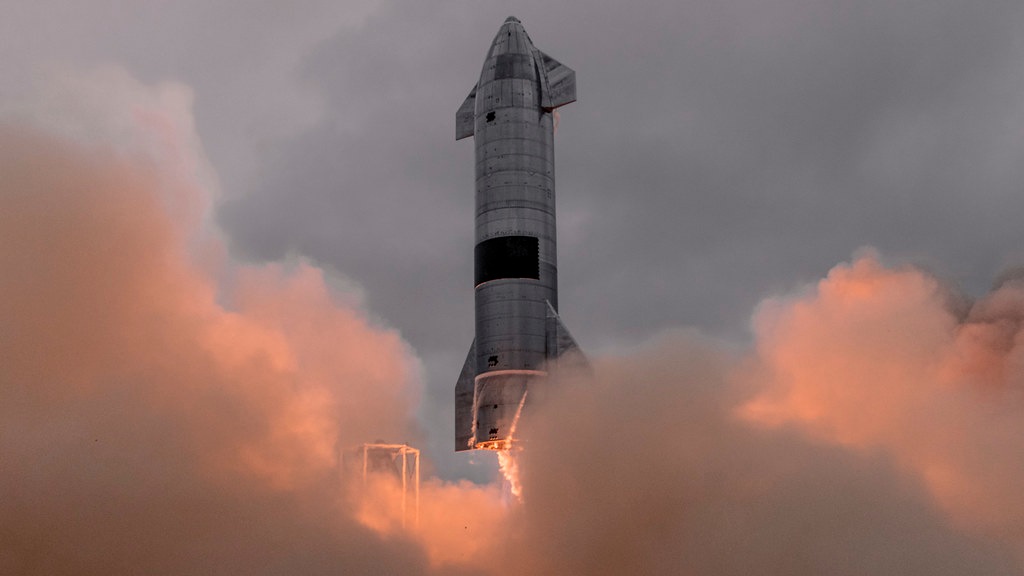
The global space industry is entering a historic turning point, and all eyes are now fixed on SpaceX’s Starship Flight 12. What makes this mission extraordinary is not just another test launch from Starbase, Texas, but the arrival of the first-ever full Starship V3 stack — a giant leap that could redefine the future of deep-space exploration, Moon missions, and eventually, human settlement on Mars.
From the dramatic rollout of Ship 39 (S39) and Booster 19 (B19) to the suspense surrounding the delayed Wet Dress Rehearsal (WDR), the aerospace community is witnessing one of the most important moments in modern rocket history.
At the same time, NASA’s Artemis missions continue generating massive public excitement and economic growth, while Europe is stepping boldly into reusable spaceflight technology with the ESA Space Rider program.
This is no longer just about launching rockets. This is about building the infrastructure for humanity’s future beyond Earth.
The First Full Starship V3 Stack Has Arrived
SpaceX has officially reached a major milestone at Starbase, Texas, with the successful integration of Ship 39 (S39) and Booster 19 (B19) — creating the first complete Starship V3 full stack ever assembled.
This moment represents far more than a visual achievement. It symbolizes the next evolution of the Starship program and serves as the foundation for Flight 12, one of the most anticipated launches in recent aerospace history.
Standing over 120 meters tall, Starship V3 is now the largest and most advanced launch system ever prepared for flight testing.
Why the Full Stack Matters
The full-stack integration combines the upper-stage spacecraft with the massive Super Heavy booster. This configuration allows engineers to test the complete launch architecture exactly as it will perform during launch operations.
For SpaceX, this is the ultimate demonstration of readiness before attempting another ambitious test mission.
The integration also confirms that the company is moving aggressively toward achieving several critical goals:
- Reusable heavy-lift transportation
- Moon landing capabilities
- Mars cargo delivery systems
- Interplanetary human travel
- Rapid launch turnaround operations
The successful stacking of S39 and B19 is a major indication that SpaceX is entering a new phase of operational maturity.
The Challenging Journey to the Launch Pad
Transporting a rocket this massive is an engineering challenge on an entirely different scale.
Before S39 could arrive at the launch pad, SpaceX engineers had to solve several technical problems involving the launch tower’s famous robotic “chopsticks.”
The Chopsticks Technical Delay
The chopsticks are giant robotic arms attached to the launch tower that are responsible for:
- Lifting Starship stages
- Stacking the rocket
- Potentially catching boosters during landing
During preparations, engineers identified issues with the carriage skates connecting the tower to the robotic arms. While it may sound like a small mechanical issue, even the slightest malfunction can become catastrophic when handling a structure taller than a skyscraper.
In aerospace engineering, precision is everything.
SpaceX teams worked rapidly to replace components and ensure complete reliability before moving the rocket.
The Dramatic Rollout of Ship 39
On the evening of May 8th, spectators and livestream viewers watched as Ship 39 slowly crawled toward the launch site.
The stainless-steel spacecraft swayed slightly during transport, creating tense moments for engineers and fans alike. Despite the nervous excitement, the giant spacecraft arrived safely and was eventually lifted into the launch tower’s robotic arms.
The successful installation instantly became one of the most iconic images in recent spaceflight history.
What Makes Starship V3 Different?
The arrival of Starship V3 signals a massive technological upgrade over previous versions.
While V1 and V2 demonstrated the core architecture of Starship, the V3 design introduces improvements focused on power, durability, and payload efficiency.
Enhanced Raptor Engine Performance
One of the biggest upgrades involves the next-generation Raptor engines.
These engines are expected to provide:
- Higher thrust output
- Better fuel efficiency
- Improved reliability
- Enhanced engine startup systems
The increased power could dramatically improve Starship’s capability to transport heavy payloads to orbit and beyond.
Structural Improvements
Starship V3 also features refined structural engineering to better withstand:
- Extreme launch vibrations
- Re-entry heat stress
- Aerodynamic pressure
- Thermal expansion
These refinements are essential for achieving SpaceX’s long-term vision of fully reusable spacecraft capable of flying repeatedly with minimal refurbishment.
Increased Payload Capacity
Perhaps the most exciting upgrade is the improved payload capability.
Future missions may include:
- Lunar cargo systems
- Artemis Human Landing System operations
- Mars habitat components
- Satellite mega-deployments
- Deep-space exploration hardware
The larger payload capability could reduce launch costs significantly and accelerate humanity’s expansion into space.
WDR Test Scrubbed: What Happened?
Despite the excitement surrounding Flight 12, reports indicate that the Wet Dress Rehearsal (WDR) test experienced delays or scrubbing concerns, raising questions about launch readiness.
However, within aerospace operations, such delays are extremely common and often represent responsible engineering decisions rather than serious failures.
What Is a Wet Dress Rehearsal?
A Wet Dress Rehearsal is essentially a full launch simulation without engine ignition.
It allows engineers to test:
- Fuel loading systems
- Cryogenic handling
- Ground support equipment
- Countdown procedures
- Launch software synchronization
- Tank pressurization systems
This is one of the most critical pre-launch tests for any rocket system.
Why Starship V3 Needs Extensive Testing
Unlike some previous Starship flights where SpaceX skipped full WDR procedures, the debut of Starship V3 requires a much more cautious approach.
The stakes are now significantly higher because Flight 12 could directly influence:
- NASA Artemis mission timelines
- Human lunar landing schedules
- Future Mars mission planning
- Commercial launch confidence
- International space partnerships
A rushed launch could create setbacks far more damaging than a temporary delay.
The Incredible Complexity of Cryogenic Fueling
One of the most visually stunning aspects of the WDR process is the cryogenic fueling operation.
Super-Chilled Propellant Loading
During the test, SpaceX pumps:
- Liquid Oxygen (LOX)
- Liquid Methane
into both stages of the rocket simultaneously.
These propellants are stored at extremely low temperatures to maximize fuel density and engine efficiency.
As fueling progresses, venting gases create giant clouds around the launch pad, giving Starship an almost science-fiction appearance.
The Frost-Covered Rocket
As temperatures plunge, frost forms across the spacecraft’s outer skin.
This frozen appearance is not cosmetic — it is direct evidence of the extreme thermodynamics involved in preparing a rocket for launch.
The sight of a frost-covered Starship standing against the Texas sky has already become symbolic of modern space exploration.
The Massive Water Deluge System
Another critical component tested during the WDR is the launch pad’s water deluge system.
Why SpaceX Uses Hundreds of Thousands of Gallons of Water
When Starship launches, the force generated by the engines is so immense that it can:
- Damage launch infrastructure
- Create destructive acoustic shockwaves
- Erode concrete surfaces
- Harm nearby equipment
To counter this, SpaceX deploys a gigantic water suppression system capable of releasing 300,000 to 450,000 gallons of water within seconds.
This water absorbs heat, suppresses acoustic energy, and protects the launch pad from catastrophic damage.
The system became especially important after earlier Starship launches caused significant debris and pad destruction.
NASA Artemis 2 Is Fueling a New Space Race
While SpaceX dominates headlines at Starbase, NASA’s Artemis program continues reshaping public enthusiasm for human spaceflight.
Artemis 2 Is Bringing Humans Back to the Moon
Artemis 2 will become the first crewed mission to travel around the Moon since the Apollo era.
The mission includes astronauts:
- Reid Wiseman
- Victor Glover
- Christina Koch
- Jeremy Hansen
This crew has already become globally recognized symbols of the next generation of lunar exploration.
Massive Crowds Gather on the Space Coast
Public excitement surrounding Artemis 2 has exploded.
Approximately 346,000 visitors traveled to Florida’s Space Coast during peak mission activity.
This level of attendance demonstrates that humanity’s fascination with space exploration remains incredibly strong.
Artemis Missions Are Creating Huge Economic Growth
The Artemis program is not only inspiring people — it is generating major economic benefits.
Visitor Spending Surges
During launch week:
- Average visitor spending reached approximately $462
- Total tourism revenue exceeded $41 million
- Local hotels, restaurants, and transportation services experienced major demand spikes
This demonstrates how space exploration can directly stimulate regional economies.
Human Missions Drive Public Engagement
Compared to Artemis 1, public interest rose dramatically once astronauts became involved.
Human stories create emotional connections that robotic missions often cannot replicate.
The presence of real astronauts transforms launches into global cultural events.
Digital Audiences Are Bigger Than Ever
Although Apollo-era launches attracted enormous physical crowds, modern missions now dominate the digital world.
The Era of Global Livestream Spaceflight
Today, billions of people can watch launches instantly through:
- YouTube livestreams
- Social media platforms
- Mobile apps
- News networks
- Space-focused communities
This digital accessibility has expanded the reach of space exploration beyond anything possible during the 1960s.
The modern space race is no longer limited to those standing near launch pads — it now belongs to the entire planet.
Europe Enters the Reusable Spacecraft Era
The rise of reusable spaceflight is no longer dominated solely by American companies.
The European Space Agency (ESA) is now moving aggressively into reusable orbital technology with its new Space Rider program.
What Is Space Rider?
Space Rider is a reusable, uncrewed orbital laboratory designed to:
- Stay in orbit for up to two months
- Conduct microgravity experiments
- Return scientific payloads safely to Earth
- Reduce mission costs through reusability
Unlike traditional capsules, Space Rider uses a lifting-body design and lands autonomously under a steerable parafoil.
Advanced Heat Shield Technology
One of the vehicle’s most impressive features is its thermal protection system.
The underside uses 21 advanced ceramic tiles capable of surviving temperatures reaching 2,900°F while traveling at hypersonic speeds.
This technology is critical for enabling reusable spacecraft operations.
Reusability Is Transforming the Entire Space Industry
For decades, rockets were largely disposable.
After launch, expensive boosters and spacecraft would fall into the ocean or burn up during re-entry.
Today, companies and agencies are racing toward a new model: rapid reusability.
Why Reusable Rockets Matter
Reusable systems dramatically reduce:
- Launch costs
- Manufacturing time
- Mission preparation expenses
- Resource waste
This shift could eventually make space travel as operationally routine as modern aviation.
SpaceX pioneered this transformation with Falcon 9, and Starship aims to take it to the next level.
Now Europe is following the same path.
Why Flight 12 Could Change the Future of Space Exploration
Flight 12 is far more than another test launch.
Its success could influence the timeline for several major programs, including:
- NASA Artemis 4
- NASA Artemis 5
- Moon base infrastructure
- Mars cargo missions
- Commercial deep-space operations
The Starship Human Landing System
NASA selected Starship as the Human Landing System (HLS) for future Artemis Moon missions.
That means the success of Starship V3 directly impacts America’s return to the lunar surface.
A successful Flight 12 would increase confidence in:
- Orbital refueling
- Long-duration spaceflight
- Lunar landing capability
- Human transportation systems
The implications are enormous.
The Beginning of a New Space Age
The world is now witnessing the beginning of what could become the most important decade in modern aerospace history.
At Starbase, engineers are preparing the largest rocket ever built.
At NASA, astronauts are training for humanity’s return to deep space.
In Europe, reusable spacecraft are becoming reality.
The infrastructure for permanent human activity beyond Earth is slowly taking shape.
Humanity Is Moving Beyond Exploration
For decades, space missions were primarily about exploration and scientific discovery.
Now the conversation is evolving toward:
- Permanent lunar operations
- Space manufacturing
- Interplanetary logistics
- Human settlement beyond Earth
This represents a profound shift in human civilization.
Final Thoughts
The debut of the first full Starship V3 stack has created enormous anticipation across the aerospace world. Even with the WDR test delays and engineering challenges, Flight 12 remains one of the most important launches SpaceX has ever attempted.
Success could accelerate humanity’s journey toward the Moon and Mars.
Failure would still provide critical lessons that push the industry forward.
Either way, history is unfolding in real time.
From the frozen tanks of Starship at Starbase to the roaring crowds gathered for Artemis launches and the rise of Europe’s reusable spacecraft ambitions, one thing is becoming increasingly clear:
The next era of human spaceflight has officially begun.
FAQs
1. What is Starship Flight 12?
Starship Flight 12 is the upcoming major test mission by SpaceX featuring the debut of the powerful Starship V3 rocket system. It is expected to test advanced upgrades for future Moon and Mars missions.
2. What makes Starship V3 different from previous versions?
The new Starship V3 includes major improvements such as:
- More powerful Raptor engines
- Better structural durability
- Increased payload capacity
- Enhanced heat resistance
- Improved reusability systems
These upgrades are designed to support long-term deep-space exploration.
3. What is the full Starship V3 stack?
The “full stack” refers to the complete combination of:
- Ship 39 (S39) – the upper spacecraft
- Booster 19 (B19) – the Super Heavy booster
Together, they form the tallest and most powerful Starship system ever assembled.
4. Why is Flight 12 so important?
Flight 12 could become a major milestone because its success may directly influence:
- NASA Artemis Moon missions
- Future Mars mission timelines
- SpaceX reusable rocket development
- Human lunar landing systems
It is considered one of the most critical Starship tests so far.
5. What does WDR mean in aerospace?
WDR stands for Wet Dress Rehearsal. It is a complete launch simulation where engineers test fueling systems and countdown procedures without actually launching the rocket.
6. Why was the WDR test scrubbed or delayed?
The WDR delay likely occurred due to technical checks or safety precautions. In aerospace, delays are common because engineers prioritize system reliability and mission safety over rushing a launch.
7. What fuels does Starship use?
Starship uses:
- Liquid Oxygen (LOX)
- Liquid Methane
These cryogenic fuels help produce the enormous thrust needed for deep-space missions.
8. Why does Starship become covered in frost during testing?
The frost forms because the rocket is filled with extremely cold cryogenic fuel. The low temperatures freeze moisture in the surrounding air, creating the white icy appearance on the rocket’s surface.
9. What are the “chopsticks” at Starbase?
The “chopsticks” are giant robotic arms attached to the launch tower. They are used to:
- Lift Starship stages
- Stack the rocket
- Potentially catch returning boosters during landing
This is one of SpaceX’s most innovative launch technologies.
10. How tall is Starship V3?
The complete Starship V3 stack stands at over 120 meters (394 feet) tall, making it the largest rocket system ever built.
11. What is NASA Artemis 2?
Artemis 2 is NASA’s first crewed Moon mission since the Apollo era. The mission will send astronauts around the Moon as part of NASA’s plan to establish long-term lunar exploration.
12. How does Starship support the Artemis program?
NASA selected Starship as the Human Landing System (HLS) for future Artemis missions. This means Starship could eventually transport astronauts from lunar orbit to the Moon’s surface.
13. What is Europe’s Space Rider program?
Space Rider is a reusable orbital spacecraft developed by the European Space Agency (ESA). It is designed to conduct scientific experiments in orbit and safely return them to Earth.
14. Why are reusable rockets important?
Reusable rockets help reduce:
- Launch costs
- Manufacturing expenses
- Space mission turnaround time
- Environmental waste
They make space travel more sustainable and economically viable.
15. Could Starship eventually take humans to Mars?
Yes. One of SpaceX’s long-term goals is to use Starship for:
- Mars cargo transport
- Human Mars missions
- Building permanent settlements on Mars
Starship is specifically designed for interplanetary travel.
16. When is the Starship Flight 12 launch expected?
SpaceX has not officially confirmed the final launch date yet. The mission timeline depends on successful testing, including Wet Dress Rehearsal validation and regulatory approvals.
Read More:
- Tesla Semi New Massive Order & Production Destroy Trucking Industry
- SpaceX’s Starship Flight 13 “NEVER Return” will Make History… Never seen Before
- Tesla expands its mass-market color palette in the U.S.
- Tesla Semi gets strange-but-understandable comparison from Jay Leno
- Tesla Bot Gen 3 Production Just Changed Everything – Gen 2 Is Over
1 thought on “First Starship V3 FULL STACK for Flight 12, But WDR Test Scubbed! Can it Make History”