
NEW Tesla Battery Threat: Sodium-Ion & Aluminum-Ion Could Change EVs Forever: The electric vehicle (EV) industry is entering a major technological transition. For years, lithium-ion batteries have dominated the market, powering everything from affordable city cars to premium long-range EVs. But rising raw material costs, supply chain bottlenecks, geopolitical uncertainty, and performance limitations in extreme weather are pushing automakers and battery companies to explore alternatives.
Two technologies are attracting particular attention: aluminum-ion batteries and sodium-ion batteries. While aluminum-ion technology promises dramatically faster charging, sodium-ion batteries are already moving toward large-scale commercial production.
Together, these technologies could challenge the long-standing dominance of conventional lithium-ion batteries and potentially reshape the future of Tesla, EV manufacturers, battery suppliers, and consumers.
Why Lithium-Ion Batteries Face a New Challenge
Lithium-ion technology remains the established standard for modern EVs because it offers a strong combination of energy density, performance, charging capability, and manufacturing maturity.
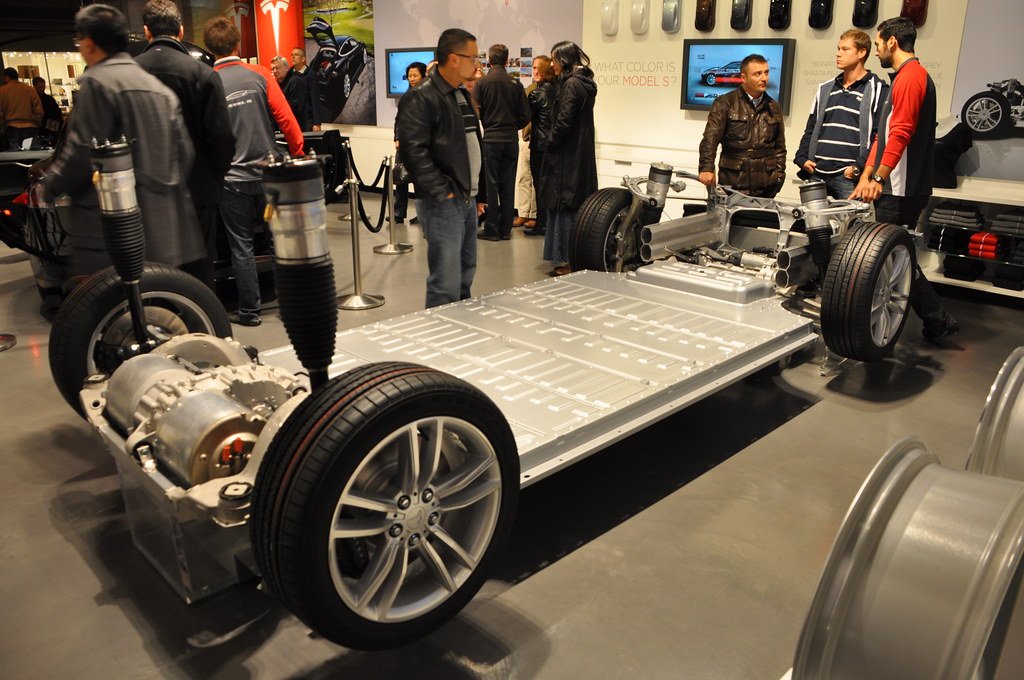
However, the chemistry depends on materials such as lithium, nickel, cobalt, manganese, and copper. Prices and availability of these materials can fluctuate because of global demand, mining constraints, geopolitical tensions, and supply chain disruptions.
Extreme temperatures are another issue. Traditional lithium-ion batteries can experience significant reductions in range and power delivery in extremely cold conditions.
This creates an opportunity for alternative battery chemistries that can reduce dependence on critical minerals while improving specific aspects of EV performance.
Aluminum-Ion Batteries: The 6-Minute Charging Revolution
One of the most exciting developments comes from Australia’s Graphene Manufacturing Group (GMG), working with the University of Queensland and industrial partners including Rio Tinto.
The company’s aluminum-ion battery technology is designed around a simple but potentially powerful idea: replace conventional lithium-based chemistry with aluminum and graphene.
The result could be a battery that charges dramatically faster than today’s typical EV batteries.
100% Charge in Approximately 6 Minutes
Laboratory testing has produced one of the technology’s most impressive claims: the cells reportedly reached 62% capacity in just three minutes and approximately 100% charge in around six minutes.
If this performance can eventually be achieved in a production EV, it could fundamentally change how drivers think about charging.
Instead of waiting 20, 30, or even 60 minutes at a fast-charging station, drivers could potentially recharge an EV in roughly the time it takes to buy a coffee.
Ultra-fast charging could be particularly valuable for commercial fleets, taxis, delivery vehicles, and premium EVs where vehicle downtime directly affects profitability.
Aluminum Could Reduce Critical Mineral Dependence
Another major advantage is the material supply chain.
The proposed aluminum-ion chemistry eliminates lithium, nickel, cobalt, and copper, instead using aluminum across the electrodes alongside graphene.
Aluminum is relatively abundant and benefits from an established global mining, transportation, and recycling ecosystem.
That could give aluminum-ion batteries an important strategic advantage if manufacturers can successfully scale production.
Aluminum-Ion Still Has Major Hurdles
Despite the impressive laboratory results, aluminum-ion batteries are not yet ready to replace lithium-ion batteries across the automotive industry.
The technology remains around Technology Readiness Level 4 (TRL 4), meaning it is still in component validation rather than full vehicle-scale commercialization.
Before automakers can confidently deploy the technology, researchers must demonstrate:
- Long-term battery degradation performance
- Thermal safety during high-power discharge
- Pack-level energy density
- Consistent manufacturing yields
- Real-world automotive durability
So, aluminum-ion may represent a major future breakthrough, but widespread commercial adoption is still some distance away.
Sodium-Ion Batteries Are Already Moving Into the Market
While aluminum-ion technology remains in development, sodium-ion batteries are much closer to commercial scale.
Chinese battery giant CATL is positioning its Naxtra sodium-ion battery as a potential alternative to lithium iron phosphate (LFP) technology, particularly as manufacturers look for lower-cost battery solutions.
The basic advantage is straightforward: sodium is abundant and inexpensive compared with many of the materials used in lithium-based batteries.
Exceptional Cold-Weather Performance
Perhaps the most interesting feature of sodium-ion technology is its performance in extreme cold.
Conventional lithium-ion batteries can lose substantial usable capacity and power when temperatures fall below freezing. This is particularly important for EV adoption in northern regions where winter temperatures can become extremely low.
CATL’s Naxtra battery is reported to retain more than 90% of its usable capacity at -40°C.
It is also claimed to deliver approximately three times the discharge power of a typical LFP pack at -30°C.
If these figures translate into reliable real-world performance, sodium-ion batteries could become particularly attractive for cold-climate EVs and commercial fleets.
Sodium-Ion Could Make EVs Cheaper
Cost is another major advantage.
Because sodium is abundant and widely available, sodium-ion batteries could help manufacturers reduce exposure to fluctuations in lithium prices and other critical battery materials.
This could be particularly important for affordable electric cars.
Instead of reserving advanced battery technology for expensive premium models, automakers could use sodium-ion cells in entry-level EVs designed for urban transportation.
Initial sodium-ion vehicles are expected to offer ranges of around 400 kilometers (250 miles) per charge, while future versions are targeting approximately 600 kilometers (370 miles).
That could make sodium-ion increasingly competitive for mainstream consumers.
Aluminum-Ion vs Sodium-Ion vs Lithium-Ion
| Feature | Aluminum-Ion | Sodium-Ion | Lithium-Ion |
|---|---|---|---|
| Main advantage | Ultra-fast charging | Low cost and cold-weather performance | High energy density and maturity |
| Key materials | Aluminum, graphene | Sodium, iron, manganese | Lithium, nickel, cobalt, manganese |
| Lithium required | No | No | Yes |
| Charging potential | ~6 minutes in testing | Improving | Varies by chemistry |
| Commercial status | Development/validation | Commercial production | Mass-market standard |
| Ideal applications | Premium EVs, fast-charge fleets | Affordable and cold-climate EVs | Broad range of EVs |
What These Batteries Could Mean for Tesla and Other EV Makers
The rise of alternative battery chemistries could create significant strategic pressure across the automotive industry.
Tesla and other EV manufacturers have invested heavily in lithium-based battery technology, manufacturing infrastructure, and charging ecosystems. If alternative chemistries become cheaper, faster, or more reliable in specific applications, automakers may need to diversify their battery strategies.
For consumers, the impact could be even more significant.
Lower EV Prices
Sodium-ion batteries could reduce battery costs, potentially allowing manufacturers to introduce cheaper electric vehicles without sacrificing essential performance.
Faster Charging Expectations
If aluminum-ion batteries successfully reach mass production, a six-minute full recharge could redefine consumer expectations.
Today’s charging infrastructure and vehicle designs could eventually be judged against much faster battery technology.
Used EV Depreciation Risks
There could also be consequences for existing EV owners.
As new vehicles become cheaper, faster-charging, and more capable in extreme temperatures, older lithium-ion EVs could face increased depreciation.
Consumers may become less willing to pay premium prices for used EVs if newer battery technologies offer major performance improvements.
The Future of EV Batteries
The EV battery market may not ultimately be dominated by a single chemistry.
Instead, the industry could move toward a multi-chemistry future, where different batteries serve different purposes.
Lithium-ion batteries are likely to remain important because of their mature manufacturing ecosystem and high energy density. Sodium-ion could become a strong option for affordable vehicles and extreme-weather applications, while aluminum-ion could eventually target situations where ultra-fast charging is the priority.
The biggest question is whether these promising technologies can move from laboratory results and early commercial production into reliable, cost-effective mass manufacturing.
If they can, the consequences could be enormous.
Sodium-ion batteries could make EVs cheaper. Aluminum-ion batteries could make charging dramatically faster. And together, they could force the entire EV industry to rethink what consumers should expect from an electric car.
FAQs
1. What are sodium-ion batteries?
Sodium-ion batteries are rechargeable batteries that use sodium ions instead of lithium ions to store and release energy. Sodium is abundant and generally less expensive than lithium, making this chemistry attractive for lower-cost electric vehicles and large-scale battery production.
2. What are aluminum-ion batteries?
Aluminum-ion batteries are an emerging battery technology that uses aluminum-based chemistry, with graphene playing an important role in the technology discussed in this article. Their biggest potential advantage is extremely fast charging compared with conventional lithium-ion batteries.
3. How quickly can aluminum-ion batteries charge?
Laboratory testing of the aluminum-ion technology discussed in the article reportedly reached 62% capacity in about three minutes and approximately 100% charge in around six minutes. However, these results are from testing and should not be confused with proven mass-market EV charging performance.
4. Are sodium-ion batteries better than lithium-ion batteries?
Not necessarily. Each chemistry has different strengths. Sodium-ion batteries can offer advantages in cost, material availability, and cold-weather performance, while lithium-ion batteries currently provide higher energy density and a much more mature manufacturing ecosystem.
5. Do sodium-ion batteries contain lithium?
No. Sodium-ion batteries replace lithium with sodium as the primary charge-carrying ion. This can reduce dependence on lithium mining and lithium-price fluctuations.
6. Do aluminum-ion batteries use lithium?
The aluminum-ion chemistry described in the article is designed to operate without lithium, nickel, cobalt, and copper. Instead, it relies primarily on aluminum and graphene-based components.
7. Can sodium-ion batteries work in extremely cold weather?
Yes. One of the key advantages being demonstrated by modern sodium-ion technology is cold-weather performance. CATL’s Naxtra battery has been reported to retain more than 90% of usable capacity at -40°C, potentially making sodium-ion technology attractive for cold climates.
8. What is CATL Naxtra?
CATL Naxtra is a sodium-ion battery technology developed by CATL, one of the world’s major EV battery manufacturers. It is being positioned as a lower-cost alternative for applications that currently rely heavily on lithium-based battery chemistries.
9. Will sodium-ion batteries make electric cars cheaper?
They could. Sodium is abundant and can reduce reliance on more expensive or volatile battery materials. If manufacturers achieve large-scale production and pass those savings to consumers, sodium-ion batteries could help enable more affordable EVs.
10. Will aluminum-ion batteries replace lithium-ion batteries?
It is too early to say. Aluminum-ion technology remains in development and validation, so it must still demonstrate long-term durability, safety, energy density, manufacturing consistency, and commercial scalability before widespread automotive adoption.
11. What is the biggest advantage of aluminum-ion batteries?
The biggest potential advantage is ultra-fast charging. If laboratory charging performance can be successfully translated into mass-produced automotive battery packs, aluminum-ion technology could dramatically reduce EV charging downtime.
12. What is the biggest advantage of sodium-ion batteries?
The major advantages are lower material costs, abundant raw materials, and strong performance in extremely cold conditions. These characteristics could make sodium-ion batteries particularly useful for affordable EVs, fleet vehicles, and cold-climate markets.
13. Will these batteries threaten Tesla?
Potentially, but not immediately. Tesla and other EV manufacturers currently benefit from mature lithium-ion battery technology. However, if sodium-ion batteries significantly reduce costs or aluminum-ion batteries deliver dramatically faster charging at scale, automakers—including Tesla—may face pressure to adopt or support alternative battery technologies.
14. Could new battery technologies reduce the value of existing EVs?
Yes, there is a potential depreciation risk. If future EVs offer substantially lower prices, faster charging, longer usable range, or dramatically better cold-weather performance, buyers could become less willing to pay high prices for older lithium-ion vehicles.
15. Which battery technology is best for future electric vehicles?
There may not be a single winner. Lithium-ion is likely to remain important for high-energy-density applications, sodium-ion could become popular in affordable and cold-climate EVs, and aluminum-ion could eventually target vehicles where ultra-fast charging is especially valuable.
16. When will sodium-ion and aluminum-ion batteries become mainstream?
Sodium-ion batteries are already moving into commercial production, making them considerably closer to mainstream adoption. Aluminum-ion batteries are at an earlier development stage and need further testing and manufacturing validation. Their widespread adoption will depend on cost, durability, safety, energy density, and production scalability.
Read More:
- Wow! Tesla Bot Gen 3 Finally Learning To Cook A Meal
- Tesla gives the Roadster an official “Go for launch” demonstration date
- Starship Flight 15 May Never Return Home… Here’s Why
- New Gen 3.5 Solid-State Battery, 381 Wh/kg Finally Goes MASS PRODUCTION
- Tesla plans big safety improvements for Full Self-Driving v15