

2026 Tesla All-New Motor Finally Hit The Market: Elon Musk Reveals: Tesla has set the EV industry on fire with the unveiling of its latest motor technology. With advancements like the interior permanent magnet synchronous reluctance motor, carbon-wrapped Plaid motor, and flatwire winding, Elon Musk is pushing efficiency, power, and performance to new heights. But what exactly is Tesla solving, and how does this new motor set a new benchmark for electric vehicles?
Let’s dive into the details of this game-changing innovation.
How Does the Permanent Magnet Synchronous Motor Surpass Tesla’s Earlier Induction Motor?
Tesla’s shift from induction motors to permanent magnet synchronous motors (PMSMs) marked a pivotal leap in EV technology. Let’s take a closer look at the transition.
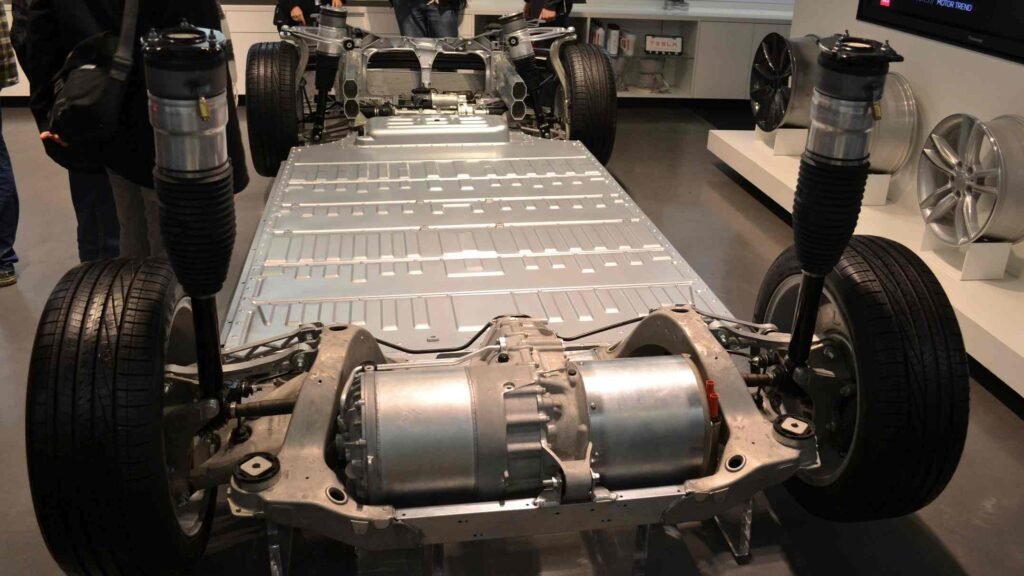
Tesla’s Early Induction Motors:
- Tesla’s early models, such as the 2008 Roadster, featured three-phase AC induction motors based on the Lotus Elise design.
- Power: 185 KW
- Maximum speed: 14,000 RPM
- Torque: 430 Nm
Induction motors offered high power density and acceleration, but at the cost of reduced efficiency at low and medium speeds.
The Shift to Permanent Magnet Motors:
In 2014, Tesla introduced copper rotor cage technology, enhancing the power and efficiency of induction motors. This advancement allowed the Model S Plaid to achieve breathtaking acceleration—reaching 100 km/h in just 2.1 seconds.
However, induction motors still had limitations, especially in mass-market models like the Model 3. Despite this, Tesla continued using them for cost and reliability reasons. Unlike permanent magnet motors, induction motors are more affordable and reliable, but less efficient at lower speeds.
Tesla’s innovation came when they started incorporating permanent magnet synchronous motors in the third-generation drivetrains in the Model 3 and Model Y, significantly improving efficiency and range.
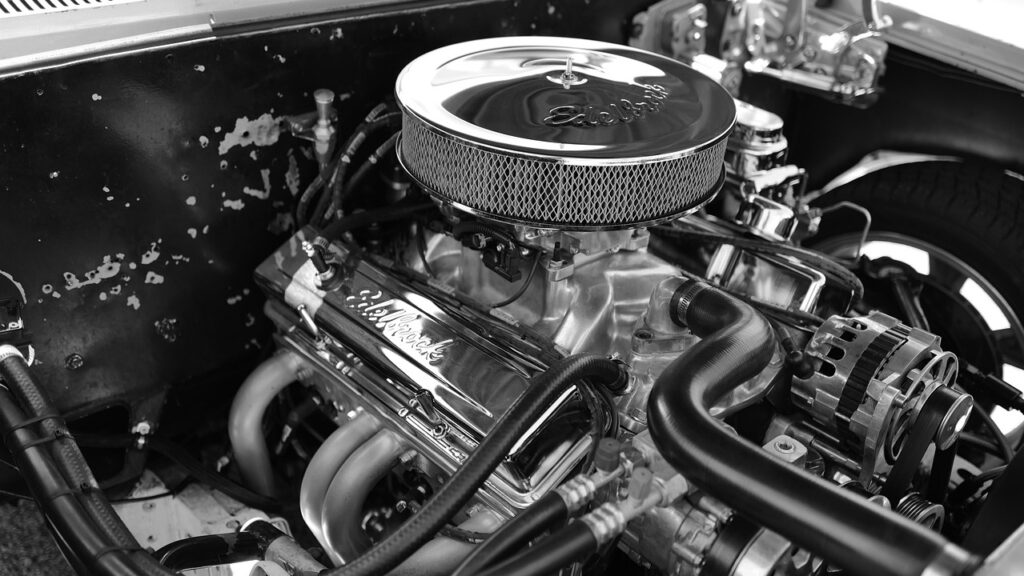
Tesla’s Motor Technology Evolution and Performance
| Motor Technology | Key Features | Main Benefits | Tesla Models / Applications |
|---|---|---|---|
| AC Induction Motor | Three-phase AC motor design | Strong acceleration, reliability, and high power density | 2008 Tesla Roadster |
| Permanent Magnet Synchronous Motor (PMSM) | Uses permanent magnets to generate torque | Improved energy efficiency, reduced energy losses, and increased driving range | Tesla Model 3 and Model Y |
| Carbon-Wrapped Plaid Motor | Carbon fiber rotor wrapping supports high rotational speeds | Greater rotor strength, improved high-RPM capability, and compact performance | Tesla Model S Plaid |
| Flatwire Winding Technology | Flat conductors replace traditional round-wire coils | Improved power density, heat management, and motor packaging | Tesla Model 3 |
| Interior Permanent Magnet Synchronous Reluctance Motor | Combines embedded permanent magnets with reluctance-based torque generation | Balanced efficiency, power, and durability | Mass-market EV drivetrain applications |
| Oil-Cooled Motor System | Oil helps transfer heat from motor components | Improved thermal management and sustained performance under demanding conditions | Tesla electric drivetrain applications |
What’s New in Tesla’s Motor Technology?
Tesla’s latest motor technology features several groundbreaking designs that take performance to the next level.
Carbon-Wrapped Plaid Motor:
Tesla’s Plaid motor is a game-changing leap in electric drivetrain design. The key innovation lies in the use of carbon fiber winding around the rotor, addressing thermal expansion issues and enabling extreme rotational speeds.
Key Benefits:
- Stronger electromagnetic field compared to traditional steel-encased rotors.
- Higher revolutions per minute (RPM) while maintaining structural integrity.
- Capable of unparalleled power and efficiency while being compact.
Elon Musk has referred to the Plaid motor as arguably the most advanced motor on Earth. Tesla is already working on an even more powerful version for the Next Generation Roadster.
Flatwire Winding Technology:
Tesla further revolutionized motor technology with the introduction of flatwire winding in the 2022 Tesla Model 3. Transitioning from round wire coils to flatwire coils has resulted in:
- Higher power and torque densities.
- Significant reduction in heat generation.
- Enhanced power density of 4.4 kW per kg.
With this flatwire motor, Tesla has achieved improved thermal efficiency and reduced energy losses, allowing for better overall performance.
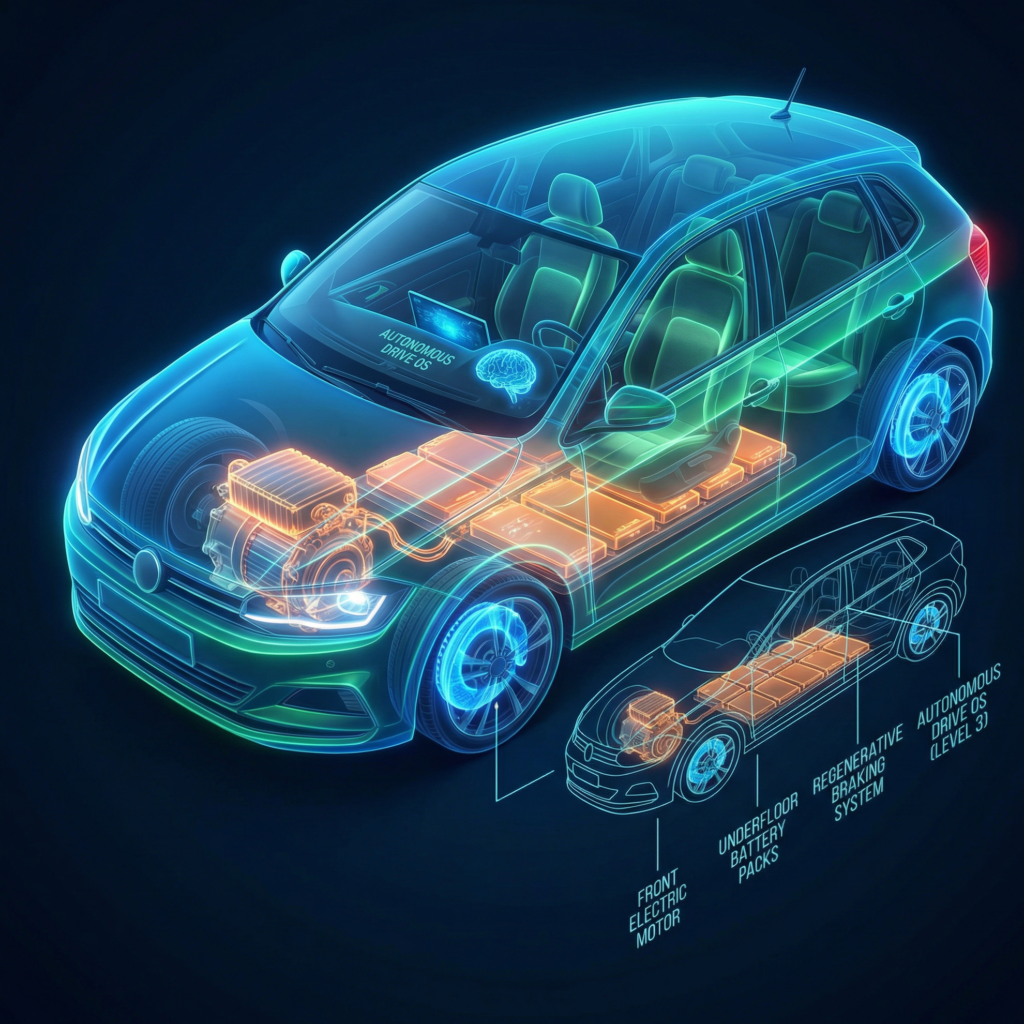
Oil Cooling Technology for Enhanced Performance
Tesla has enhanced motor performance with the switch from water cooling in earlier models to oil cooling in the Model 3. This advancement has improved thermal management and power density.
- Water cooling only cools the motor casing, while oil cooling targets both the stator and rotor for superior efficiency.
- This shift has allowed Tesla to overcome thermal limitations, unlocking greater performance.
Key Features and Benefits of Tesla’s New Motor Innovations
| Innovation | How It Works | Primary Advantage | Impact on EV Performance |
|---|---|---|---|
| Permanent Magnet Technology | Uses embedded magnets to create a magnetic field | High operating efficiency | Helps improve driving range and reduce energy consumption |
| Carbon Fiber Rotor Wrapping | Reinforces the rotor against mechanical stress at high speeds | Greater structural integrity at high RPM | Supports high-performance acceleration |
| Flatwire Winding | Uses flat-shaped copper conductors in motor windings | Better conductor packing and heat transfer potential | Can improve power density and thermal performance |
| Oil Cooling | Circulates oil to remove heat from motor components | More direct heat management than cooling only the motor housing | Helps maintain performance under heavy loads |
| Embedded Neodymium Magnets | Places permanent magnets inside the rotor | Helps secure magnets and reduce the risk of detachment | Improves rotor durability under demanding operating conditions |
| Thermal Management | Combines cooling methods and motor design improvements | Reduces overheating risks | Supports reliability and consistent power output |
| Advanced Drivetrain Integration | Combines motor design, cooling, and power electronics | More compact and efficient drivetrain packaging | Helps Tesla balance performance, efficiency, and vehicle range |
What Motor Configuration Can Truly Balance Performance and Power?
The Interior Permanent Magnet Synchronous Reluctance Motor:
Tesla’s breakthrough design is the interior permanent magnet synchronous reluctance motor (IPMSRM), which combines the compactness and efficiency of permanent magnets with the engineering brilliance of reluctance motors.
Key Features:
- Perfect for mass-market vehicles like the Model 3, which prioritize efficiency and range over extreme torque.
- The motor combines permanent magnets with magnetic reluctance for torque generation.
Despite its advantages, this motor has some challenges, including demagnetization and magnet degradation due to high temperatures and heavy vibrations. However, Tesla has addressed this by embedding neodymium iron boron magnets inside the rotor, reducing the risks of magnet detachment and enhancing the motor’s durability.
Conclusion: Tesla’s Motor Innovation: A Game-Changer in the EV Industry
Tesla’s new motor technology is a testament to cutting-edge innovation. With advancements like flatwire winding, oil cooling, and the carbon-wrapped Plaid motor, Tesla continues to redefine what’s possible in electric vehicle performance, efficiency, and reliability.
As the EV industry continues to evolve, these technologies will drive revolutionary transformations in the world of electric cars. Which of these innovations excites you the most? Let us know in the comments below.
FAQ
1. What is the new motor technology introduced by Tesla?
Tesla’s advanced motor technologies include the interior permanent magnet synchronous reluctance motor, carbon-wrapped Plaid motor, and flatwire winding technology. These innovations aim to improve efficiency, power density, thermal management, and electric vehicle performance.
2. How does Tesla’s new motor compare to older induction motors?
Tesla’s permanent magnet synchronous motors (PMSMs) generally offer better efficiency at low and medium speeds than induction motors. They can reduce energy losses and help improve driving range in vehicles such as the Tesla Model 3 and Model Y.
3. Why did Tesla switch from induction motors to permanent magnet motors?
Tesla adopted permanent magnet motors in several mass-market vehicles to improve energy efficiency and range. Although induction motors offer excellent performance and durability, permanent magnet designs can provide greater efficiency under many everyday driving conditions.
4. What is the carbon-wrapped Plaid motor, and how does it work?
The carbon-wrapped Plaid motor uses a carbon-fiber sleeve around the rotor to help withstand mechanical stresses associated with extremely high rotational speeds. This design supports high-RPM operation, strong performance, and compact electric drivetrain engineering.
5. How does Tesla’s flatwire winding technology improve motor performance?
Flatwire winding technology replaces conventional round-wire conductors with flat-shaped conductors. This design can improve the use of space inside the motor, increase power density, and support better heat transfer, contributing to improved motor efficiency and performance.
6. What is the benefit of oil cooling in Tesla’s motor systems?
Oil cooling helps remove heat from motor components more directly than systems that primarily cool the motor housing. Improved thermal management can help maintain consistent power output, reduce overheating risks, and support reliable performance under demanding driving conditions.
7. What is an interior permanent magnet synchronous reluctance motor?
An interior permanent magnet synchronous reluctance motor combines permanent magnets embedded inside the rotor with torque generated through magnetic reluctance. This arrangement can provide a useful balance of energy efficiency, torque, and power density for electric vehicles.
8. How does Tesla improve the durability of its permanent magnet motors?
Motor durability depends on rotor design, material selection, cooling, and manufacturing quality. Embedding neodymium iron boron magnets inside the rotor helps secure the magnets and reduce the risk of detachment during high-speed operation and vibration.
9. What role does thermal management play in Tesla’s electric motors?
Thermal management prevents excessive heat from damaging motor components or reducing performance. By improving cooling and heat transfer, Tesla can help its electric drivetrains maintain reliability, efficiency, and consistent power delivery during demanding driving conditions.
10. Can Tesla’s new motor technology increase electric vehicle driving range?
Yes, more efficient motor designs can help increase EV driving range by reducing the amount of battery energy lost during power conversion and propulsion. However, actual range also depends on battery capacity, vehicle weight, aerodynamics, tires, temperature, and driving style.
11. What makes the Tesla Model S Plaid motor different from conventional EV motors?
The Tesla Model S Plaid drivetrain uses high-performance motor engineering designed to deliver exceptional acceleration and high rotational speeds. Its carbon-fiber rotor reinforcement helps address mechanical stresses that occur when a motor operates at very high RPM.
12. How does flatwire winding help reduce heat generation in electric motors?
Flatwire conductors can improve the use of available winding space and help optimize electrical resistance and heat transfer. Depending on the motor design, these improvements can reduce losses and support better thermal efficiency under different operating conditions.
13. Are permanent magnet motors better than induction motors for every electric vehicle?
No. Permanent magnet motors can offer excellent efficiency, particularly under many everyday driving conditions, but they rely on magnets that may involve higher material costs and supply-chain challenges. Induction motors remain valuable because of their robustness, design flexibility, and lack of permanent magnets.
14. Will Tesla’s advanced motor technology be used in the next-generation Roadster?
Tesla’s high-performance motor technology could inform future sports-car development, but the exact specifications and configuration of a next-generation Tesla Roadster should be treated as unconfirmed unless officially announced. Carbon-wrapped rotors and advanced cooling offer potential benefits for high-speed electric performance.
15. Why is Tesla’s motor innovation important for the future of electric vehicles?
Tesla’s motor innovations highlight how improvements in efficiency, cooling, materials, and manufacturing can make electric vehicles more competitive. Better motor technology can support improved driving range, acceleration, reliability, and energy utilization, helping advance the broader electric vehicle industry.
Read More:
- New 2027 Tesla Bot Optimus Gen 3 Revealed
- Where Does Elon Musk Live? Unveiling the Mystery Behind the Billionaire’s Homes
- SpaceX’s Mechazilla 2 Finally Ready to Catch Starship – Chopstick Pad B
- This Is Why SpaceX’s Raptor engine is the King of Rocket Engines
- 2025 Tesla Smart TV: Revolutionizing Entertainment with AI Technology
1 thought on “2026 Tesla All-New Motor Finally Hit The Market: Elon Musk Reveals”