
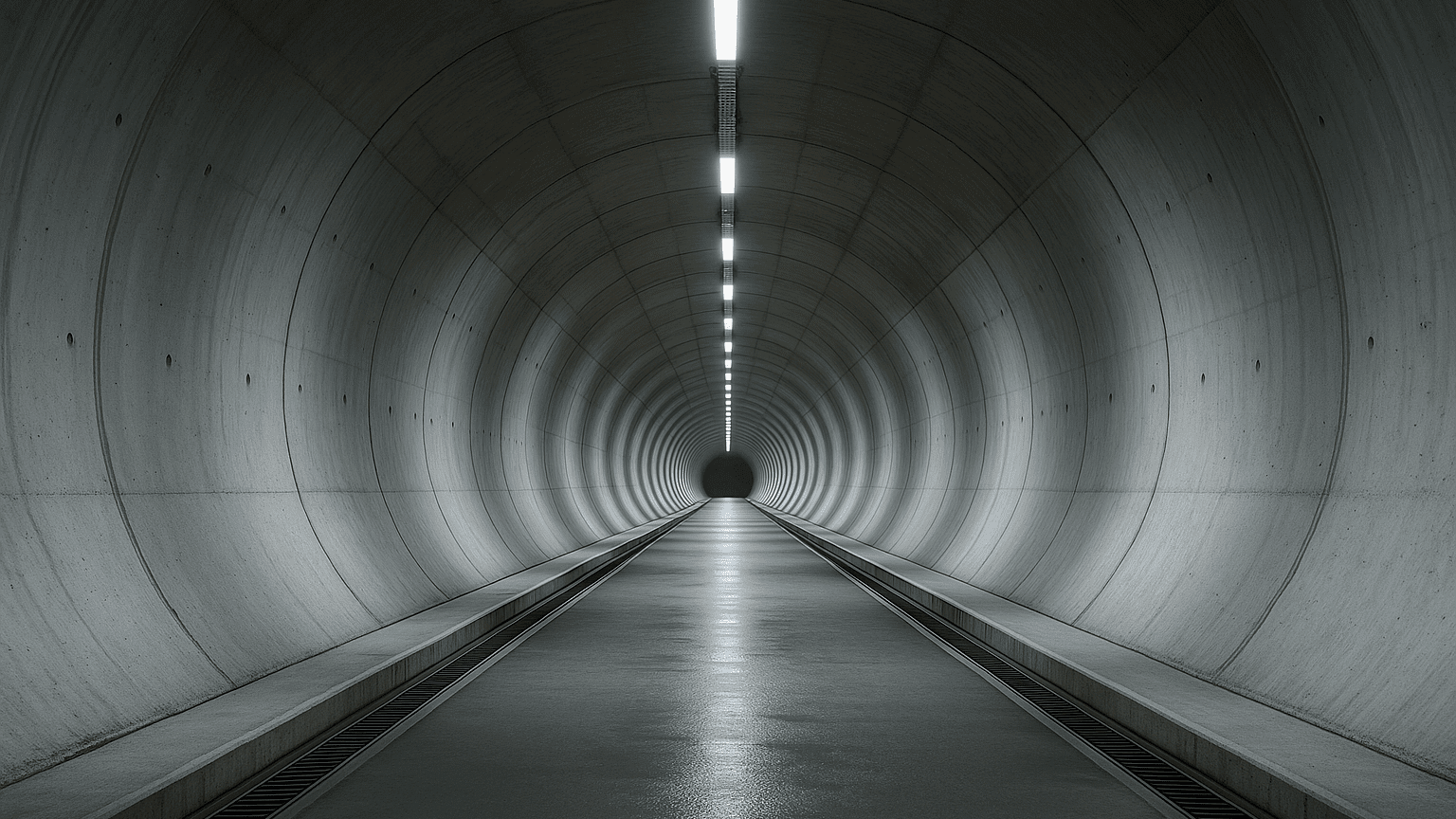
In January 2026, The Boring Company stunned the transportation world by announcing the winners of its ambitious “Tunnel Vision Challenge.” Instead of choosing just one city, the company selected three major American cities—New Orleans, Baltimore, and Dallas—to become live testing grounds for its next-generation underground transportation network.
The announcement marks a dramatic turning point for underground transit technology. For years, critics viewed Elon Musk’s tunnel projects as futuristic concepts that were too expensive, impractical, or technologically unrealistic. But now, fully funded projects are moving from PowerPoint slides to real-world implementation.
The bigger story is not just about tunnels. It’s about a complete transformation of urban mobility, infrastructure ownership, artificial intelligence, and the future relationship between governments and private tech companies.
This article explores how The Boring Company plans to reshape transportation through faster tunnel construction, Tesla-powered autonomous systems, and a radically different economic model.
Why The Boring Company Chose These Three Cities
The selection of Dallas, Baltimore, and New Orleans was not random. Each city presents a unique challenge that allows The Boring Company to prove its technology under very different conditions.
Dallas: The Social Equity Experiment
Dallas is home to the proposed University Hills Loop, a project designed to address transportation inequality in South Dallas.
Many neighborhoods in this area suffer from limited transit access and extremely long commute times. Residents often spend nearly an hour traveling to major employment centers. The Boring Company is positioning the Dallas Loop as more than a transportation project—it is marketing it as an economic development tool.
The strategy is politically smart.
By focusing on underserved communities, The Boring Company gains public support while shielding itself from criticism regarding privatized infrastructure. Faster mobility could increase job access, improve local economies, and potentially reduce transportation barriers for thousands of residents.
This project will test whether underground transit can solve social and economic problems in large urban environments.
Baltimore: The Infrastructure Nightmare Test
Baltimore presents an entirely different challenge.
Unlike newer cities, Baltimore has over a century of underground infrastructure buried beneath its streets. Water pipes, gas lines, electrical systems, telecommunications cables, and aging utility tunnels create an extremely dense and dangerous environment for excavation.
The proposed Ravens Loop will force The Boring Company to navigate one of the most complicated urban underground systems in America.
This matters because most global cities have aging infrastructure. If TBC can successfully tunnel beneath Baltimore without causing disruptions, it proves that the company can operate in established metropolitan areas worldwide.
For skeptics, Baltimore is the real-world test of whether The Boring Company can scale beyond controlled environments like Las Vegas.
New Orleans: The Ultimate Engineering Stress Test
New Orleans may be the toughest challenge of all.
The city is famous for its soft soil, unstable terrain, and extremely high water table. Traditional tunneling in New Orleans is notoriously difficult because the ground conditions are unpredictable and water intrusion is a constant threat.
This is where The Boring Company hopes to silence critics completely.
If the company can successfully build tunnels beneath New Orleans, it would demonstrate that its technology can handle some of the harshest geological conditions on Earth.
In many ways, the NOLA Loop is not just a transportation project—it is a public demonstration of engineering capability.
The Real Innovation: Infrastructure as a Service
One of the most controversial aspects of The Boring Company’s strategy is its economic model.
Elon Musk repeatedly emphasizes that these projects can be built with “not a single tax dollar.” At first glance, this sounds revolutionary. Cities receive advanced transportation systems without upfront public spending.
But there is a hidden trade-off.
Who Owns the Data?
Traditional infrastructure projects require cities to spend tens of millions of dollars on geological surveys, underground mapping, and engineering studies before construction even begins.
When The Boring Company pays for these studies, it gains ownership of the resulting technical data.
That data becomes incredibly valuable.
Over time, TBC could accumulate proprietary underground maps, geological intelligence, and infrastructure insights that cities themselves may not fully control.
Long-Term Infrastructure Control
This creates what many analysts call an Infrastructure as a Service (IaaS) model.
Instead of governments fully owning transportation systems, cities may become dependent on privately operated mobility networks for decades.
This raises important questions:
- Will cities lose planning autonomy?
- Could transportation pricing eventually rise?
- What happens if private operators prioritize profits over accessibility?
The concern is that citizens may gradually shift from public stakeholders to subscription-based transportation customers.
Much like streaming services transformed media consumption, The Boring Company could potentially transform transportation into a recurring subscription economy.
How The Boring Company Makes Tunnels So Cheap
One of the biggest reasons people are paying attention to The Boring Company is cost.
Traditional subway systems are incredibly expensive, often costing billions of dollars per mile. TBC claims its system can reduce costs by 40 to 60 times compared to conventional tunneling.
That dramatic reduction comes from two major innovations.
Prufrock: The Machine Changing Tunnel Construction
At the center of the operation is the company’s advanced tunneling machine called Prufrock.
Tesla founder Elon Musk believes speed is everything in construction economics.
Traditional tunnel boring machines move approximately 100 meters per week. Prufrock aims to achieve nearly one mile per week.
That speed changes everything.
Faster construction means:
- Lower labor costs
- Reduced project delays
- Less disruption to cities
- Faster return on investment
The company’s philosophy is similar to Tesla’s manufacturing strategy: automate aggressively and optimize relentlessly.
Smaller Tunnels Mean Massive Savings
Another key innovation is tunnel size.
Traditional subway systems require tunnels between 5.5 and 6.5 meters wide to accommodate large train cars and extensive ventilation systems.
The Boring Company uses tunnels only 3.6 meters wide—just enough for Tesla vehicles.
This smaller diameter creates enormous savings because:
- Less earth must be excavated
- Fewer construction materials are needed
- Ventilation requirements are reduced
- Structural reinforcement becomes cheaper
The result is a dramatically more affordable underground transportation system.
Critics argue that smaller tunnels limit passenger capacity, but supporters believe point-to-point efficiency matters more than traditional mass transit volume.
Tesla AI and the Hidden Purpose of These Tunnels
Perhaps the most fascinating part of The Boring Company’s strategy is that these tunnels are not just transportation systems.
They are AI training environments.
Why Tunnels Are Perfect for Full Self-Driving
Tesla Full Self-Driving performs best in predictable environments.
Surface streets are chaotic. They contain:
- Pedestrians
- Cyclists
- Traffic lights
- Weather changes
- Construction zones
- Random human behavior
Tunnels eliminate nearly all of those variables.
Inside a controlled underground environment, Tesla vehicles operate in what engineers call a “one-dimensional system.” That makes autonomous driving dramatically easier and safer.
This could allow Tesla to accelerate Level 5 autonomy development far faster than competitors.
Cybercab and the Future of RoboTaxis
Tesla Cybercab is expected to play a major role in these underground networks.
Instead of requiring fully autonomous performance on public streets immediately, Tesla can first deploy roboaxis in highly controlled tunnel environments.
This offers enormous advantages:
- Easier regulatory approval
- Faster deployment timelines
- Better AI training conditions
- Lower accident risk
The tunnels effectively become physical servers for Tesla’s AI ecosystem.
That integration between infrastructure, vehicles, and software is something traditional transit systems cannot easily replicate.
Can The Loop Replace Public Transit?
One of the largest criticisms against The Boring Company concerns passenger capacity.
Traditional metro systems can transport up to 50,000 people per hour.
The current Loop system in Las Vegas handles significantly fewer passengers.
Critics argue that underground Teslas cannot replace high-capacity subway systems.
And they are probably correct.
But The Boring Company may not actually be trying to replace subways.
Point-to-Point Transportation Changes the Experience
Unlike trains that stop at multiple stations, The Loop focuses on direct travel.
Passengers enter a vehicle and travel straight to their destination without intermediate stops.
This creates a fundamentally different transportation experience:
- Faster travel times
- Reduced waiting
- Personalized routing
- On-demand mobility
Instead of acting like a traditional train system, the Loop functions more like an underground rideshare network.
The Rise of Premium Urban Mobility
The Boring Company’s system appears designed for premium mobility rather than maximum capacity.
That means:
- Faster service for business districts
- Efficient airport connections
- Reduced congestion in high-demand corridors
- Better convenience for commuters
Rather than replacing buses and subways entirely, these tunnels could become a premium transportation layer that complements existing transit systems.
This hybrid model may ultimately prove more realistic than attempting to replace traditional public transportation altogether.
Why Underground Transportation Is More Resilient
Another major advantage of underground transit is resilience.
Elon Musk has compared tunnel transportation to being inside a submarine.
That analogy is surprisingly accurate.
Protection From Weather and Surface Disasters
Underground systems are naturally protected from:
- Hurricanes
- Heavy rain
- Snowstorms
- Heat waves
- Surface traffic accidents
This is especially important in cities increasingly affected by climate-related disruptions.
For example, New Orleans frequently experiences severe flooding risks. Underground transportation could provide a more stable mobility option during surface-level emergencies.
Tunnels and Earthquakes
Interestingly, tunnels are often safer during earthquakes than above-ground structures.
Instead of resisting seismic movement, tunnels move with the surrounding earth. This flexibility can reduce structural stress during tremors.
As climate uncertainty and urban density continue increasing, resilient transportation infrastructure becomes more valuable.
The Bigger Vision: Vertical Integration
The true genius behind The Boring Company may not be the tunnels themselves.
It is the integration of multiple systems into one ecosystem.
The company is combining:
- Infrastructure
- Vehicles
- Artificial intelligence
- Data systems
- Autonomous software
This creates a vertically integrated transportation platform unlike anything currently available.
Traditional construction companies build tunnels but do not manufacture vehicles.
Automakers produce cars but do not control infrastructure.
Software companies develop AI but lack transportation networks.
The Boring Company and Tesla are attempting to control all three layers simultaneously.
That creates massive competitive advantages.
Will Cities Accept Silicon Valley Infrastructure?
The projects in Dallas, Baltimore, and New Orleans represent more than engineering experiments.
They are political experiments.
Cities must decide whether they are comfortable exchanging traditional public ownership for the speed and efficiency promised by private technology companies.
Supporters argue that governments move too slowly and infrastructure projects take decades to complete.
Critics worry that privatized mobility networks could reduce public accountability and increase corporate influence over essential transportation systems.
This debate will likely shape urban infrastructure for decades.
Conclusion: The Future of Transportation Is Being Built Underground
The Boring Company is no longer just a futuristic startup digging experimental tunnels in the desert.
It is becoming a serious infrastructure player with real-world urban projects capable of reshaping transportation systems across America.
The selection of Dallas, Baltimore, and New Orleans reveals a carefully designed strategy:
- Test social impact
- Prove engineering capability
- Validate economic scalability
- Accelerate autonomous vehicle deployment
At the heart of the vision is something much larger than tunnels.
The Boring Company is building an integrated mobility ecosystem where underground infrastructure, Tesla vehicles, and AI-driven transportation operate as one seamless platform.
If successful, these projects could redefine how cities move people in the 21st century.
The question now is no longer whether underground autonomous transit is possible.
The real question is whether cities are willing to embrace a future where transportation is operated at Silicon Valley speed.
FAQs
1. What is The Boring Company?
The Boring Company is an infrastructure and tunnel construction company founded by Elon Musk. The company focuses on building low-cost underground transportation systems using advanced tunneling technology.
2. Why did The Boring Company choose Dallas, Baltimore, and New Orleans?
The three cities were selected because each offers a different challenge. Dallas tests social and economic impact, Baltimore tests tunneling through aging infrastructure, and New Orleans tests engineering performance in difficult geological conditions.
3. What is the Tunnel Vision Challenge?
The “Tunnel Vision Challenge” was launched in January 2026 by The Boring Company to identify cities interested in adopting next-generation underground transit systems.
4. How does The Boring Company reduce tunnel construction costs?
The company lowers costs through smaller tunnel sizes and faster excavation technology using the Prufrock tunneling machine, which is designed to tunnel much faster than traditional machines.
5. What is the Prufrock tunneling machine?
Prufrock is The Boring Company’s advanced tunnel boring machine that aims to excavate up to one mile of tunnel per week, significantly faster than conventional tunneling systems.
6. How are Boring Company tunnels different from traditional subway tunnels?
Traditional subway tunnels are much wider to accommodate trains. The Boring Company builds smaller tunnels specifically designed for electric vehicles like Teslas, reducing excavation and construction expenses.
7. What is the purpose of the Dallas University Hills Loop?
The Dallas Loop is designed to improve transportation access in underserved communities by reducing commute times and connecting residents to major employment centers.
8. Why is New Orleans considered a major engineering challenge?
New Orleans has soft soil and a very high water table, making underground construction extremely difficult compared to most cities.
9. What is the Ravens Loop in Baltimore?
The Ravens Loop is a proposed underground transit project in Baltimore that will test The Boring Company’s ability to tunnel through dense and aging urban infrastructure.
10. Are these tunnel systems fully autonomous?
The tunnels are expected to support advanced autonomous driving using Tesla Full Self-Driving technology in controlled underground environments.
11. What is Tesla Cybercab?
Tesla Cybercab is Tesla’s upcoming autonomous robotaxi concept designed for driverless transportation services.
12. Can The Boring Company replace public transportation systems?
The company’s Loop system is designed to complement existing public transit rather than completely replace buses, metros, or trains.
13. Why are tunnels beneficial for self-driving cars?
Tunnels eliminate many unpredictable elements such as pedestrians, intersections, traffic lights, and weather conditions, creating a safer and more controlled environment for autonomous driving.
14. Are underground tunnels safer during earthquakes?
Yes. Underground tunnels are often more earthquake-resistant because they move with the surrounding ground rather than resisting seismic movement like above-ground structures.
15. Will citizens pay subscription fees for these transit systems?
Some analysts believe future Loop systems may operate using subscription-style pricing models similar to toll roads or rideshare services.
16. What makes The Boring Company’s vision unique?
The company combines underground infrastructure, Tesla electric vehicles, and AI-powered autonomous software into one vertically integrated transportation ecosystem.
Read More:
- First Starship V3 FULL STACK for Flight 12, But WDR Test Scubbed! Can it Make History
- Tesla Semi New Massive Order & Production Destroy Trucking Industry
- SpaceX’s Starship Flight 13 “NEVER Return” will Make History… Never seen Before
- Tesla expands its mass-market color palette in the U.S.
- Tesla Semi gets strange-but-understandable comparison from Jay Leno
1 thought on “The Boring Company Just Built Something CRAZY”