
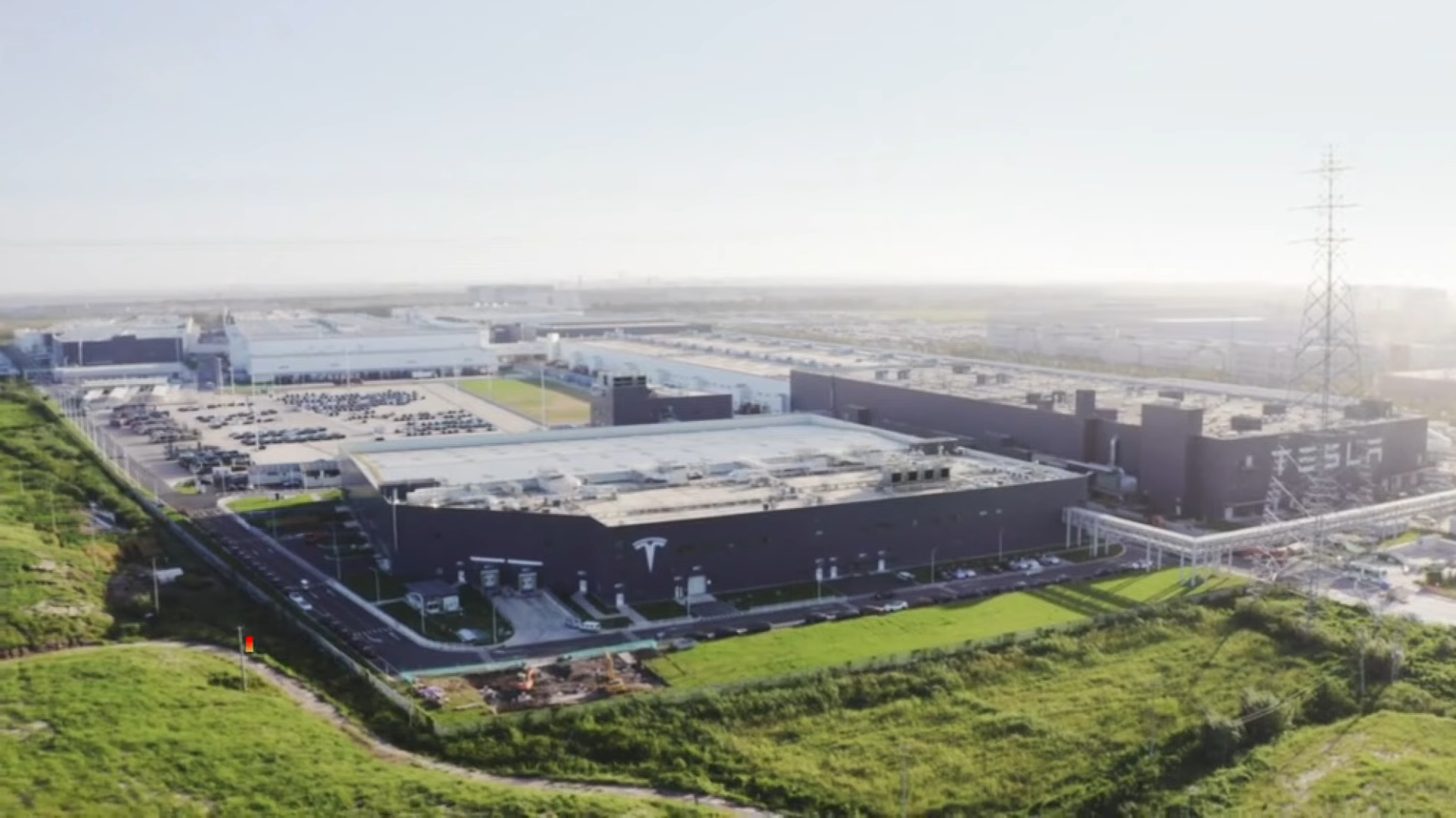
In 2026, Elon Musk is no longer just building electric cars, rockets, or AI systems separately. Instead, he is engineering something far larger — a fully integrated industrial ecosystem capable of designing chips, manufacturing vehicles, training artificial intelligence, and deploying autonomous systems under one massive operational loop.
This ambitious transformation revolves around a staggering $119 billion manufacturing strategy that combines next-generation semiconductor production with revolutionary mega-casting vehicle manufacturing. At the center of this vision are two game-changing innovations:
Together, these technologies could fundamentally reshape the future of transportation, robotics, AI infrastructure, and global manufacturing itself.
What Is the Terafab Megafactory?
The Terafab Megafactory is Elon Musk’s attempt to solve one of the biggest problems facing the modern technology world: the global semiconductor bottleneck.
Today’s tech industry depends on fragmented supply chains spread across multiple countries. Hardware is often designed in the United States, fabricated in Taiwan, packaged in Asia, and deployed globally. This creates massive delays, logistical complexity, and geopolitical risks.
Traditional semiconductor pipeline:
Design (US)→Wafer Fabrication (Taiwan)→Packaging (Asia)→Data Center Training→Deployment
Musk’s Terafab aims to compress this entire process into a single localized manufacturing ecosystem.
Why Terafab Matters
The demand for computing power is exploding due to:
- Autonomous vehicles
- AI training systems
- Humanoid robots
- Space-based AI computing
- Edge inference networks
Industry estimates suggest current global semiconductor capacity may only satisfy around 2% of future demand required by Tesla, SpaceX, and xAI systems.
Rather than relying on external foundries like:
Musk is creating a vertically integrated chip empire capable of producing advanced silicon internally.
The Massive $119 Billion Expansion Plan
The Terafab initiative reportedly began as a $25 billion project but rapidly expanded into a multi-phase industrial strategy valued at approximately $119 billion.
Key Investment Areas
Initial Development Phase
- Estimated cost: $55 billion
- Includes advanced R&D infrastructure
- Massive wafer fabrication facilities
- AI supercomputing integration
Austin Engineering Facility
A cutting-edge $3 billion engineering center is already under development in:
This location is expected to become the central nervous system for Tesla’s next-generation silicon research and rapid AI hardware iteration.
The Three Core Pillars of Terafab
The Terafab Megafactory is designed to support three major sectors inside Musk’s ecosystem.
1. Tesla Autonomous Fleet
Modern Tesla vehicles are no longer simple cars. They are essentially AI-powered mobile supercomputers.
Every autonomous Tesla must process:
- Real-time camera feeds
- Object recognition
- Traffic prediction
- Lane analysis
- Pedestrian behavior
- Environmental hazards
The future Cybercab robotaxi network will require enormous computing power with ultra-low latency.
2. Optimus Humanoid Robots
Tesla Optimus represents one of the most demanding AI computing challenges ever attempted.
Unlike smartphones or EVs, humanoid robots must simultaneously manage:
- Balance control
- Joint coordination
- Human interaction
- Real-time spatial awareness
- Dynamic workplace adaptation
This requires chips optimized specifically for robotic intelligence and edge computing.
3. Starlink Orbital AI Computing
SpaceX is evolving Starlink into more than just an internet network.
Future satellites may become space-based AI supercomputers capable of running inference directly in orbit.
This dramatically reduces latency because satellites no longer need to beam all raw data back to Earth.
The challenge? Space destroys traditional electronics.
That’s why Tesla’s Terafab is developing specialized space-grade D3 processors capable of surviving:
- Cosmic radiation
- Vacuum conditions
- Extreme thermal fluctuations
- Zero-atmosphere cooling environments
Compressing Hardware Development Into Software Speed
One of the most revolutionary aspects of Terafab is speed.
Traditional semiconductor development cycles can take years due to fragmented supply chains and overseas manufacturing dependencies.
Musk wants to turn hardware development into something closer to software iteration.
How It Works
Imagine a Tesla robotaxi encounters a rare driving edge case involving:
- Intense sun glare
- Complex traffic patterns
- Weather interference
Tesla engineers could rapidly redesign the processor architecture, print a test wafer locally, package the chip, and install it into a test vehicle near Gigafactory Texas — all within dramatically shortened development timelines.
This creates a powerful closed-loop AI manufacturing system.
AI5, AI6, and AI7: Tesla’s Next-Generation Chips
Terafab’s semiconductor roadmap centers around two major processor families.
Earth-Based AI Chips
These include:
- AI5
- AI6
- AI7
The processors are designed for:
- Massive parallel computing
- Real-time AI inference
- Thermal efficiency
- Autonomous driving systems
The AI5 chip generation is expected to enter early production in late 2026 before scaling into full mass manufacturing by 2027.
Space-Grade D3 Processors
The D3 lineup focuses on orbital AI computing for Starlink satellites.
These chips feature:
- Radiation-hardened silicon
- Extreme durability
- Advanced thermal architecture
- Space-certified reliability
The Incredible Scale of Terafab
The projected size of the Terafab ecosystem is almost difficult to comprehend.
Estimated Factory Size
- Up to 100 million square feet
- Roughly 10x larger than Gigafactory Texas
- Target output: 1 million wafers per month
If achieved, this could rival nearly 70% of current TSMC production capacity.
The 50,000-Ton Giga Press Revolution
While Terafab focuses on digital intelligence, Tesla’s manufacturing revolution also extends into physical vehicle construction.
The company’s new 50,000-ton Giga Press may completely transform how automobiles are built.
What Is the Tesla Giga Press?
Traditional vehicles are assembled from dozens or even hundreds of stamped metal components welded together.
A single underbody section may require:
- 60–70 metal parts
- Hundreds of weld points
- Complex alignment processes
This creates major manufacturing inefficiencies and structural inconsistencies.
The Problem: Tolerance Stack-Up
Every stamped metal piece carries tiny dimensional deviations.
Even errors as small as:
- 0.1 mm
- 0.5 mm
can compound across dozens of parts.
This phenomenon is called tolerance stack-up.
By the end of assembly, vehicles may experience:
- Panel gaps
- Structural misalignment
- Poor fitment
- Reduced rigidity
Traditional automakers must spend enormous amounts correcting these issues manually.
How the 50,000-Ton Giga Press Solves the Problem
Tesla’s solution is radically different.
Instead of welding dozens of parts together, the Giga Press creates massive single-piece monolithic castings.
The Process
The machine injects proprietary molten aluminum alloy into giant vacuum molds under extreme pressure.
The result:
- Entire structural sections formed in one shot
- Consistent geometry
- Dramatically fewer parts
- Faster production cycles
Large castings can reportedly be completed in just over one minute.
This removes the need for many costly post-production alignment stages.
Structural Battery Integration Changes Everything
Tesla’s mega-casting system also enables a revolutionary structural battery architecture.
Traditional EV Design
In normal electric vehicles:
- The battery is enclosed inside a heavy protective box
- The chassis carries the battery as passive weight
Tesla’s Structural Battery System
Tesla instead uses the battery pack itself as a structural component.
Structural architecture:
Front Casting⇒Structural 4680 Battery Pack⇒Rear Casting
This approach improves:
- Structural rigidity
- Weight reduction
- Crash safety
- Manufacturing simplicity
- Energy efficiency
Why Monolithic Castings Are So Important
When multi-piece welded frames experience:
- Acceleration
- Braking
- Cornering
- Torsional stress
force concentrations often occur around weld seams.
Over time, these stress points can create:
- Fatigue cracks
- Structural deformation
- Reduced durability
Tesla’s monolithic casting design distributes forces more evenly across the entire vehicle structure.
The result is:
- Higher stiffness
- Better crash protection
- Lower weight
- Improved long-term durability
Tesla Semi: Heavy Transport Reinvented
The mega-casting revolution is now expanding beyond passenger vehicles into commercial freight.
Tesla Semi may become one of the most disruptive heavy transport platforms in modern logistics.
Tesla’s Heavy-Duty Giga Press Systems
Reports suggest Tesla is preparing enormous:
- 12,000-ton
- 16,000-ton
casting systems specifically for Tesla Semi production.
Traditional commercial trucks rely on ladder-frame designs involving hundreds of steel components welded together.
These systems are heavy and vulnerable to stress fatigue after millions of kilometers of freight hauling.
Strategic Structural Nodes
Tesla is not casting entire truck frames in one piece.
Instead, the company focuses on key structural nodes such as:
Suspension Mounting Blocks
These absorb:
- Road shocks
- Vibration loads
- Dynamic stress
Motor Attachment Structures
These handle the immense torque generated by electric truck drivetrains.
Battery Enclosure Interfaces
These rigid mounting points lock the battery pack directly into the chassis structure.
Tesla’s Proprietary Aluminum Alloy
One of Tesla’s biggest breakthroughs may be its custom alloy formulation.
Traditional large castings often require heat treatment after production.
However, post-casting heat cycles frequently cause:
- Warping
- Distortion
- Tolerance failures
Tesla reportedly developed an alloy that emerges structurally stable directly from the mold.
This dramatically speeds up manufacturing.
Huge Economic Benefits for Freight Operators
In commercial trucking, weight equals money.
Every kilogram removed from the truck allows operators to:
- Carry more cargo
- Improve energy efficiency
- Reduce operating costs
Tesla’s casting strategy could reduce Tesla Semi curb weight by:
- 500–800 kilograms
This provides major economic advantages for companies like:
- PepsiCo
- UPS
The Global Mega-Casting Arms Race
Tesla’s manufacturing breakthroughs are forcing the global auto industry to adapt quickly.
Traditional assembly methods are becoming increasingly uncompetitive.
Automakers Joining the Mega-Casting Revolution
Dongfeng Motor Corporation
Operating a massive 16,000-ton die-casting machine capable of producing entire battery trays in one shot.
Hyundai Motor Company
Developing its advanced “Hypercasting” manufacturing program.
Volvo Cars
Installing an 8,500-ton mega-casting system at the Torslanda plant for future EV production.
Ford Motor Company
Testing 6,100-ton presses to improve EV profitability.
China’s Strategic Manufacturing Advantage
One major challenge for Western automakers is China’s dominance in mega-casting supply chains.
For example:
IDRA Group — the company behind Tesla’s Giga Press systems — is owned by:
LK Machinery
This creates geopolitical pressure around manufacturing independence and industrial scaling.
Why Elon Musk’s Manufacturing Vision Matters
For decades, innovation focused heavily on:
- Software
- User interfaces
- Digital services
But the next industrial era may belong to companies that master advanced manufacturing speed and automation.
Elon Musk’s strategy combines:
- AI
- Robotics
- Semiconductor fabrication
- Space infrastructure
- Autonomous mobility
- Ultra-fast manufacturing
into one vertically integrated system.
This is not merely about building cars faster.
It is about creating a self-accelerating industrial ecosystem capable of rapidly iterating hardware, AI models, and physical products at unprecedented speed.
Final Thoughts
The 2026 Terafab and Giga Press expansion represents one of the most ambitious manufacturing projects in modern industrial history.
If successful, Elon Musk’s industrial empire could fundamentally reshape:
- Global semiconductor production
- Autonomous transportation
- Robotics manufacturing
- Space-based computing
- Commercial freight logistics
The companies that dominate the future may not simply build the best products.
They may instead build the fastest, smartest, and most vertically integrated factories the world has ever seen.
And right now, Elon Musk appears determined to lead that race.
FAQs
1. What is the Terafab Megafactory?
The Terafab Megafactory is Elon Musk’s proposed advanced semiconductor manufacturing ecosystem designed to produce AI chips, robotics processors, and space-grade silicon entirely in-house.
2. Why is Elon Musk building the Terafab?
Elon Musk wants to reduce dependence on external chip manufacturers and solve the growing global semiconductor shortage affecting AI, robotics, and autonomous vehicles.
3. How much is the Terafab project expected to cost?
The full Terafab expansion is estimated to cost approximately $119 billion, making it one of the largest industrial manufacturing investments in modern history.
4. What companies currently dominate semiconductor manufacturing?
Major semiconductor foundries include:
- TSMC
- Samsung
- Intel
5. What are AI5, AI6, and AI7 chips?
These are Tesla’s next-generation AI processors designed for autonomous driving, robotics, and real-time AI inference systems.
6. What is the purpose of Tesla’s D3 space-grade processors?
The D3 chips are being developed for orbital AI computing inside future Starlink satellites and are engineered to survive harsh space environments.
7. What is the 50,000-ton Giga Press?
The 50,000-ton Giga Press is Tesla’s ultra-large die-casting machine capable of producing massive single-piece vehicle structures instead of assembling hundreds of smaller metal parts.
8. How does the Giga Press improve vehicle manufacturing?
The system reduces production complexity by:
- Eliminating hundreds of parts
- Reducing welds
- Improving structural rigidity
- Increasing manufacturing speed
- Lowering production costs
9. What is tolerance stack-up in car manufacturing?
Tolerance stack-up occurs when tiny dimensional errors from multiple stamped parts accumulate during assembly, causing alignment and structural inconsistencies.
10. How does Tesla eliminate tolerance stack-up?
Tesla solves this issue using single-piece monolithic castings, which maintain consistent geometry and reduce assembly errors.
11. What is Tesla’s structural battery architecture?
Tesla’s structural battery system uses the battery pack itself as a load-bearing component within the vehicle chassis instead of treating it as passive weight.
12. Why are monolithic castings important for EVs?
Monolithic castings improve:
- Vehicle stiffness
- Crash safety
- Weight reduction
- Manufacturing efficiency
- Long-term durability
13. How is Tesla using mega-casting technology for the Tesla Semi?
Tesla Semi uses large cast aluminum structural nodes to reduce weight, improve durability, and increase freight efficiency.
14. How much weight could Tesla reduce from the Tesla Semi?
Tesla may reduce the truck’s curb weight by approximately 500–800 kilograms, allowing operators to carry more cargo and improve energy efficiency.
15. Which automakers are competing in the mega-casting race?
Major companies investing in mega-casting include:
- Dongfeng Motor Corporation
- Hyundai Motor Company
- Volvo Cars
- Ford Motor Company
16. Why is China important in the global mega-casting supply chain?
China plays a major role because companies like LK Machinery own critical mega-casting equipment suppliers such as IDRA Group.
17. What makes Elon Musk’s manufacturing strategy revolutionary?
Elon Musk’s vision combines:
- AI
- Semiconductor production
- Autonomous vehicles
- Robotics
- Space computing
- Ultra-fast manufacturing
into one vertically integrated industrial ecosystem capable of accelerating innovation at unprecedented speed.
Read More:
- Elon Musk Shocked Everyone with New Optimus Update: Human Skin & Superintelligence
- Elon Musk called it Epic: The full story of SpaceX’s Starship Flight 12
- SpaceX Broke the Internet with Starship Flight 12 Launching…Never Seen Before
- “Raptor Shielding Failed!” SpaceX Revealed WHY Starship Booster 19 Brutally Exploded
- The Boring Company is Building an Underground Factory
1 thought on “2026 Elon Musk’s Terafab GigaFactory UPDATE Shocked Entire The World”