
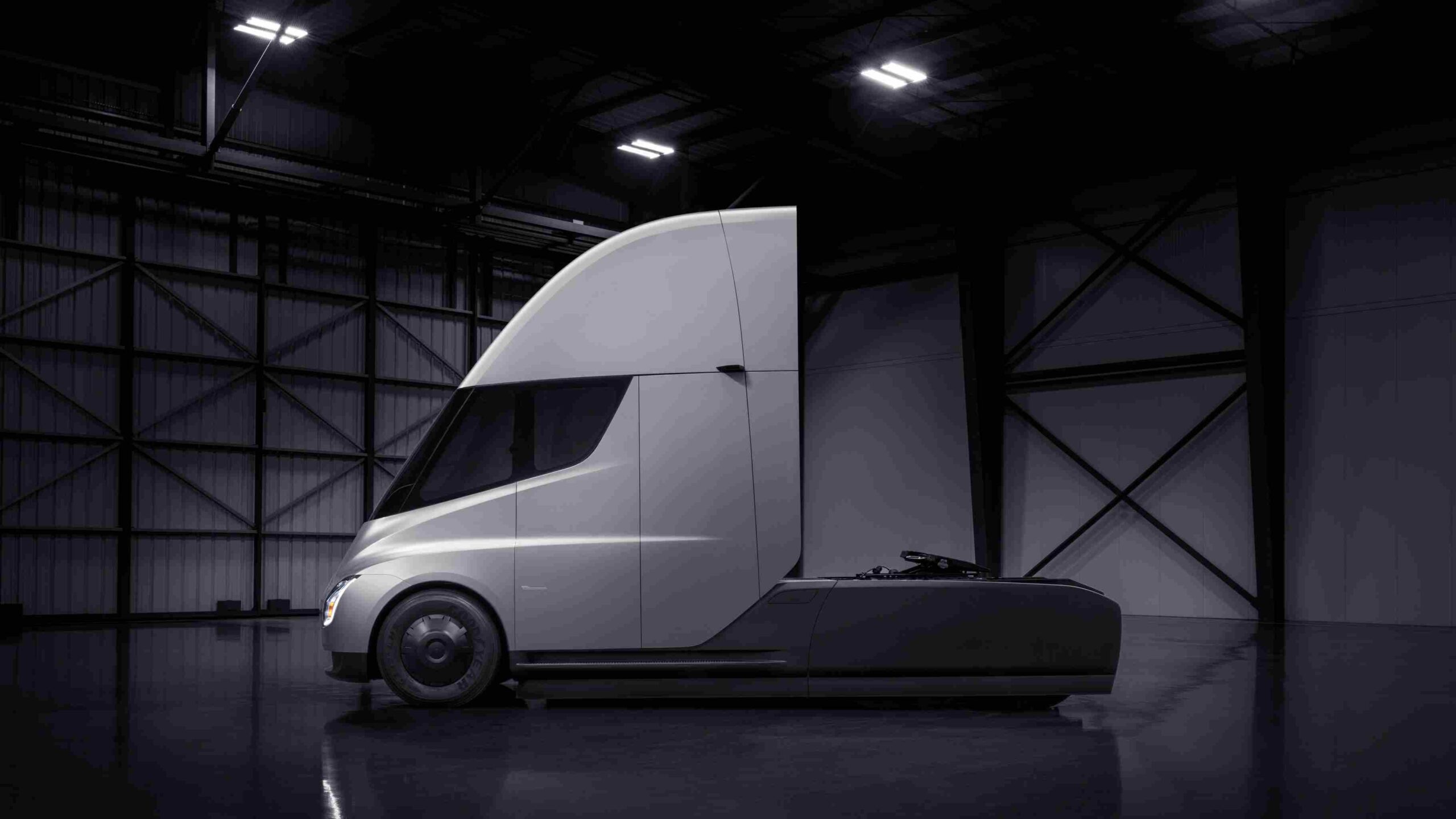
The global transportation and industrial sectors are experiencing one of the biggest transformations in modern history. Driven by electrification, artificial intelligence (AI), advanced robotics, and autonomous systems, companies are racing to define the future of logistics and labor. At the center of this revolution stands Tesla, a company that has evolved far beyond electric passenger vehicles.
With the rapid expansion of the Tesla Semi program and the aggressive development of the Optimus humanoid robot, Tesla is reshaping two of the world’s largest industries: commercial transportation and physical labor automation. Through groundbreaking engineering, massive infrastructure investments, and a unique vertically integrated business model, Tesla is building a competitive advantage that few companies can match.
In this article, we explore how Tesla’s Semi truck is dominating the electric freight market, why its specifications are unlike anything seen before, and how the Optimus robot could transform global manufacturing over the next decade.
Tesla Semi Dominates The Electric Truck Market
For years, industry experts believed that fully electric heavy-duty trucks would struggle to achieve widespread adoption. Critics argued that battery packs would be too heavy, driving range would be insufficient, and charging infrastructure would be prohibitively expensive.
Tesla has proven those assumptions wrong.
Recent market data shows that the Tesla Semi has captured nearly 90% of all clean truck voucher allocations under California’s Hybrid and Zero-Emission Truck and Bus Voucher Incentive Project (HVIP). This remarkable achievement demonstrates Tesla’s overwhelming dominance in the electric Class 8 trucking segment.
Why Fleet Operators Are Choosing Tesla Semi
The success of the Tesla Semi isn’t based on hype or speculative reservations. Fleet operators participating in incentive programs must submit detailed financial records and legally binding purchase agreements.
This means Tesla’s truck orders represent real-world deployments rather than non-committal reservations.
Major companies that have committed to Tesla Semi deployments include:
These organizations operate some of the largest logistics networks in North America, making their purchasing decisions highly significant.
The Shift From Sustainability To Profitability
Initially, Tesla Semi orders came largely from major corporations facing environmental and sustainability pressures.
Companies such as Walmart and PepsiCo wanted to reduce emissions while strengthening their ESG commitments.
However, the market is now entering a new phase.
Carriers Are Driving Demand
A significant change is occurring as professional freight carriers begin purchasing Tesla Semis.
Unlike cargo owners, transportation carriers operate on extremely thin profit margins. Their primary focus is reducing operating costs and maximizing efficiency.
The growing adoption of Tesla Semi by carriers such as:
- Watt EV
- MDB Transportation
- Covenant Logistics
demonstrates that electric trucking has moved beyond environmental marketing.
The Tesla Semi is now being adopted because it offers compelling economic benefits.
This shift represents one of the strongest validations of Tesla’s commercial trucking strategy.
Revolutionary Tesla Semi Specifications
The Tesla Semi’s success is rooted in engineering decisions that challenge traditional truck design principles.
Tesla approached the truck as a purpose-built electric vehicle rather than adapting existing diesel platforms.
The result is a machine with unprecedented efficiency.
Advanced Aerodynamic Design
One of the most important factors affecting truck efficiency is aerodynamic drag.
At highway speeds, approximately half of a truck’s energy consumption is spent overcoming air resistance.
Traditional diesel trucks typically have drag coefficients ranging between 0.65 and 0.70.
Tesla dramatically improved this figure.
By utilizing:
- Side-mounted camera systems
- A deeply angled windshield
- Reduced cab-to-trailer spacing
- Optimized rear body shaping
Tesla achieved a drag coefficient of approximately 0.40, with some prototype designs reportedly targeting 0.36.
This makes the Tesla Semi one of the most aerodynamic heavy-duty trucks ever produced.
Why Aerodynamics Matter
Every reduction in drag translates directly into:
- Lower energy consumption
- Smaller battery requirements
- Increased cargo capacity
- Reduced operating costs
Over hundreds of thousands of miles, these efficiency gains create substantial financial benefits for fleet operators.
Tesla Semi Battery And Range Performance
Perhaps the most surprising aspect of the Tesla Semi is its battery efficiency.
Many industry analysts originally predicted that a 500-mile electric truck would require battery packs exceeding 1 megawatt-hour.
Tesla proved otherwise.
Battery Specifications
The long-range Tesla Semi achieves approximately 500 miles of range using a battery pack estimated at around 822 kWh.
This reduction in battery size provides multiple advantages:
- Lower vehicle weight
- Reduced manufacturing costs
- Higher payload capacity
- Improved efficiency
Vehicle Weight Optimization
Tesla carefully balanced battery capacity and payload capability.
Key figures include:
Standard Range Tesla Semi
- Under 20,000 pounds
Long Range Tesla Semi
- Approximately 23,000 pounds
Maximum Legal Gross Vehicle Weight
- 82,000 pounds
This allows freight operators to maximize cargo revenue while maintaining long driving ranges.
Tesla Semi Energy Efficiency Is Unmatched
One of the most impressive Tesla Semi specifications is its energy consumption.
Real-world testing indicates the truck consumes approximately:
1.64 kWh per mile
A conventional diesel Class 8 truck consumes energy equivalent to roughly:
5.5 kWh per mile
This means the Tesla Semi is approximately three times more energy efficient than traditional diesel trucks.
Long-Term Cost Savings
Over a commercial lifespan of 500,000 miles, these efficiency gains can generate enormous savings.
Fleet operators may save:
- $0.50 to $0.65 per mile
- More than $300,000 per vehicle
These savings alone can justify the switch to electric freight transportation.
Lower Maintenance Costs Increase Profitability
Another major advantage of the Tesla Semi is its simplified powertrain.
Traditional diesel trucks contain numerous complex systems, including:
- Turbochargers
- Multi-speed transmissions
- Exhaust treatment systems
- Advanced cooling systems
Each component adds maintenance costs and potential downtime.
Tesla’s Three-Motor Architecture
The Tesla Semi uses a highly efficient three-motor electric drivetrain derived from Tesla’s performance vehicle technology.
Benefits include:
- Fewer moving parts
- Lower maintenance requirements
- Reduced service costs
- Improved reliability
For logistics operators, vehicle uptime is critical. Every hour a truck spends in repair is lost revenue.
Tesla’s design significantly minimizes these risks.
Megacharger Infrastructure Solves A Major Industry Challenge
Charging infrastructure has long been considered the biggest obstacle to electric trucking adoption.
Tesla addressed this challenge through the development of the Megacharger network.
Megacharger Performance
Tesla’s Megacharger system delivers approximately:
1.2 Megawatts of Peak Charging Power
This enables the Semi to recover approximately:
60% to 70% of its range in around 30 minutes
Importantly, this charging time aligns with federally mandated driver rest periods.
As a result, charging can occur during required breaks without impacting delivery schedules.
The Rise Of Charging-As-A-Service
Building a private commercial charging facility can cost millions of dollars.
For smaller trucking companies, this expense presents a major barrier.
Shared Charging Infrastructure
A new business model known as Charging-as-a-Service (CaaS) is solving this problem.
Companies such as Forum Mobility are building centralized charging hubs that multiple carriers can access.
Benefits include:
- Lower upfront costs
- Reduced infrastructure investment
- Predictable monthly expenses
- Faster electric fleet adoption
This model allows transportation companies to enjoy electric trucking benefits without constructing their own charging facilities.
Tesla Semi Expansion Into Europe
Tesla’s ambitions extend far beyond North America.
The company is reportedly preparing a European version of the Semi targeted for deployment around 2027.
Expected European Specifications
Projected features include:
- Approximately 550 kilometers of range
- Tri-motor propulsion system
- Up to 800 kW of continuous power output
- Compatibility with the Megawatt Charging System (MCS)
This expansion could significantly increase Tesla’s presence in the global freight industry.
Massive Production Growth At Gigafactory Nevada
Tesla is rapidly expanding manufacturing capacity to support future demand.
The company aims to eventually reach production levels approaching:
50,000 Tesla Semis annually
This scale would make Tesla one of the world’s largest producers of electric heavy-duty trucks.
Tesla’s vertical integration strategy allows it to control:
- Battery production
- Vehicle manufacturing
- Charging systems
- Software development
- Energy storage solutions
This level of control creates significant competitive advantages.
Tesla Optimus: The Future Of Physical Labor
While Tesla Semi is transforming transportation, the company’s Optimus humanoid robot could prove even more disruptive.
Optimus is designed to perform a wide range of physical tasks previously handled by humans.
Optimus V2.5 Represents A Major Leap Forward
Tesla’s robot has evolved dramatically in just a few years.
Early versions displayed slow movement and limited stability.
The latest generation, known as Optimus v2.5, demonstrates remarkably natural movement patterns.
Key Mechanical Improvements
Tesla redesigned nearly every aspect of the robot.
Important upgrades include:
Lower Center Of Gravity
Battery systems and electronics were relocated closer to the pelvis.
Benefits include:
- Improved balance
- Reduced energy usage
- Greater walking efficiency
Four-Bar Linkage Knee Design
Tesla implemented advanced biomechanical joints similar to those used in premium prosthetic devices.
Advantages include:
- More natural walking motion
- Improved stability
- Reduced actuator stress
High-Frequency Torque Control
The robot now operates using a sophisticated control loop running at approximately:
1,000 Hz
This allows Optimus to react dynamically to changing terrain and environmental conditions.
Vision-Based Artificial Intelligence
Unlike many robotics companies, Tesla avoids relying heavily on LiDAR systems.
Instead, Optimus uses Tesla’s vision-based AI approach.
How Optimus Understands Its Environment
Multiple camera systems feed data into neural networks that analyze:
- Depth
- Object boundaries
- Floor surfaces
- Dynamic movement patterns
The robot continuously builds a real-time understanding of its surroundings.
This allows Optimus to safely navigate:
- Factories
- Warehouses
- Distribution centers
- Industrial facilities
even when conditions constantly change.
Tesla’s Digital Cellular Manufacturing Revolution
Mass production remains the biggest challenge in humanoid robotics.
Tesla appears to be addressing this challenge through innovative manufacturing techniques.
Fremont Factory Transformation
Following the end of Model S and Model X production, Tesla repurposed portions of its Fremont facility for Optimus manufacturing.
This strategy enables faster scaling while reducing construction costs.
The company has reportedly committed more than $20 billion toward robotics production expansion.
Why Tesla Abandoned Traditional Assembly Lines
Traditional assembly lines work well for vehicles but are less suitable for complex humanoid robots.
Optimus contains over 10,000 individual components.
To improve flexibility, Tesla adopted a cellular manufacturing system.
Benefits Of Cellular Manufacturing
Independent work cells manufacture specific robot subsystems, including:
- Dextrous robotic hands
- Lower-body actuators
- Structural chassis components
- AI processing systems
Advantages include:
- Greater flexibility
- Faster engineering updates
- Reduced production interruptions
- Improved scalability
This manufacturing approach may become a blueprint for future robotics factories worldwide.
Tesla’s Autonomous Labor Strategy
Tesla plans to deploy early Optimus robots internally before offering them to external customers.
This strategy creates a powerful feedback loop.
The Self-Improving Manufacturing Cycle
The process works as follows:
- Tesla manufactures Optimus robots.
- Robots work inside Tesla factories.
- Robots help produce future robot components.
- Tesla gathers operational data.
- AI systems improve through real-world learning.
This cycle continuously improves both manufacturing efficiency and robot intelligence.
Optimus Could Transform The Global Workforce
Tesla’s long-term vision is extraordinarily ambitious.
By 2030, the company hopes to reduce Optimus pricing to approximately:
$30,000 per robot
Tesla also targets a future fleet of millions of units worldwide.
Industries Most Likely To Benefit
Potential applications include:
- Manufacturing
- Warehousing
- Logistics
- Security
- Retail
- Construction support
- Material handling
Businesses could replace recurring labor expenses with long-term autonomous assets.
This has the potential to fundamentally alter global economics.
Conclusion
The Tesla Semi and Optimus robot represent far more than individual products. Together, they form the foundation of Tesla’s broader strategy to dominate the future of transportation, automation, and artificial intelligence.
The Tesla Semi has already secured approximately 90% of new electric truck voucher allocations, proving that electric freight transportation is rapidly becoming commercially viable. Its unmatched efficiency, lower operating costs, and growing charging infrastructure network provide a compelling business case for fleet operators.
At the same time, Tesla Optimus is advancing from a research project into a scalable industrial platform capable of transforming physical labor across multiple industries.
Whether through autonomous logistics or intelligent robotics, Tesla is positioning itself at the center of the next industrial revolution. If current trends continue, the coming decade may see Tesla become not only the world’s leading electric vehicle company but also one of the most influential industrial technology companies in history.
FAQs
FAQ 1: What is the Tesla Semi?
The Tesla Semi is Tesla’s all-electric Class 8 heavy-duty commercial truck designed for long-haul freight transportation. It offers high efficiency, lower operating costs, and reduced emissions compared to traditional diesel trucks.
FAQ 2: How much range does the Tesla Semi have?
The long-range Tesla Semi offers approximately 500 miles (805 km) of driving range on a single charge, making it suitable for many commercial freight routes.
FAQ 3: Why is the Tesla Semi considered more efficient than diesel trucks?
The Tesla Semi consumes around 1.64 kWh per mile, while a conventional diesel truck uses energy equivalent to approximately 5.5 kWh per mile, making the Semi nearly three times more energy efficient.
FAQ 4: How fast can the Tesla Semi charge?
Using Tesla’s Megacharger technology, the Semi can recover about 60% to 70% of its range in around 30 minutes, helping drivers stay on schedule.
FAQ 5: What is Tesla’s market share in electric heavy-duty trucks?
Recent data suggests the Tesla Semi has secured nearly 90% of California’s clean truck voucher allocations, giving it a dominant position in the electric freight market.
FAQ 6: Which major companies have ordered Tesla Semi trucks?
Companies that have publicly committed to Tesla Semi deployments include Walmart, UPS, PepsiCo, Watt EV, DHL, J.B. Hunt, NFI Container Freight Line, and Big F Transportation.
FAQ 7: How much does a Tesla Semi cost?
The Tesla Semi’s long-range version is estimated to cost around $290,000, although incentives and fleet programs can significantly reduce the effective purchase price.
FAQ 8: What are the maintenance benefits of the Tesla Semi?
The Tesla Semi eliminates many complex diesel components such as turbochargers, transmissions, and exhaust treatment systems, resulting in lower maintenance costs and reduced downtime.
FAQ 9: What is Tesla Optimus?
Tesla Optimus is a humanoid robot developed by Tesla to perform repetitive, dangerous, and labor-intensive tasks in factories, warehouses, and other industrial environments.
FAQ 10: How does Tesla Optimus navigate its surroundings?
Optimus uses Tesla’s vision-based artificial intelligence system, relying on cameras and neural networks to understand and interact with its environment in real time.
FAQ 11: What makes Optimus different from other humanoid robots?
Optimus combines Tesla’s AI expertise, advanced robotics, mass-manufacturing capabilities, and real-world data collection, allowing for faster development and potentially lower production costs.
FAQ 12: Will Tesla sell Optimus robots to consumers?
Tesla plans to initially deploy Optimus robots internally within its factories before expanding availability. Future commercial and consumer sales are expected as production scales.
FAQ 13: How much could Tesla Optimus cost in the future?
Tesla has indicated a long-term target price of approximately $30,000 per robot, although actual pricing may vary depending on production scale and features.
FAQ 14: What industries could benefit from Tesla Optimus?
Industries that could benefit include manufacturing, logistics, warehousing, retail, security, healthcare support, and industrial maintenance, where repetitive physical tasks are common.
FAQ 15: How are Tesla Semi and Optimus connected to Tesla’s long-term strategy?
Both Tesla Semi and Optimus support Tesla’s vision of creating a highly automated future powered by electric transportation, artificial intelligence, robotics, and sustainable energy solutions, helping reduce costs and improve efficiency across multiple industries.
Read More:
- The Tesla and SpaceX merger everyone is talking about is quietly building
- Tesla’s Robotaxi dreams just took a massive step toward reality
- Tesla Cybertruck Soon Discontinued Nobody Saw Coming
- SpaceX’s New BUOY Footage revealed How exactly Starship S39 FLIP & Land Shocked whole Industry
- SpaceX to become America’s Military data backbone for missiles, drones, and warfighters
2 thoughts on “Tesla Semi 90% Of New Electric Truck Orders, Never Seen Specs”