
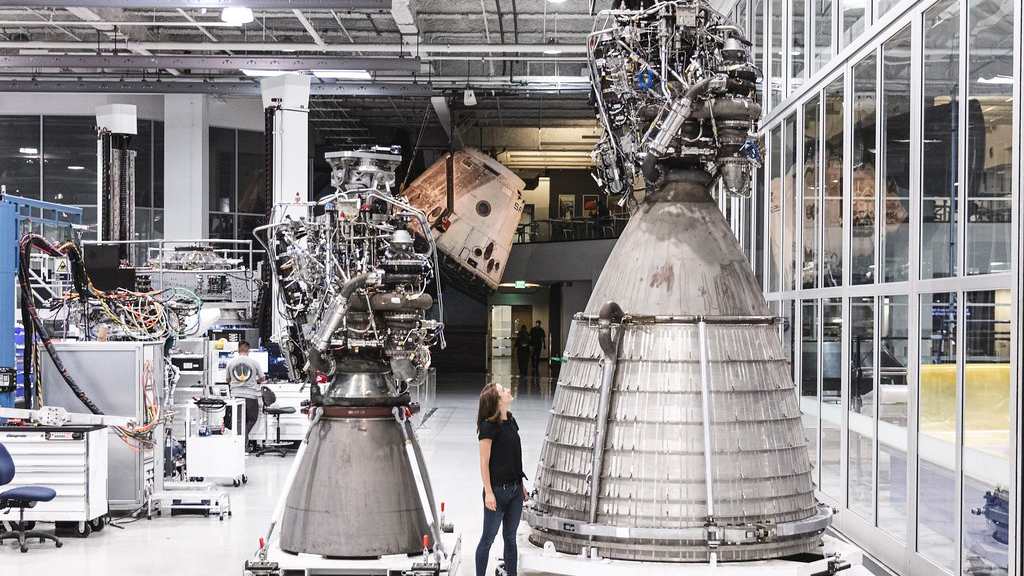
The Real Reason Why SpaceX’s new Raptor 4 is the Best Engine Ever Made: The SpaceX Starship is already considered the most powerful rocket system ever built. Every launch produces an overwhelming display of force, generating acoustic energy strong enough to shake buildings, create shockwaves felt miles away, and unleash unprecedented amounts of thrust from its massive Super Heavy Booster.
At the heart of this engineering marvel lies the revolutionary Raptor engine family, a series of methane-fueled rocket engines that have completely redefined modern aerospace propulsion. Yet even as the highly advanced Raptor 3 begins proving itself in flight operations, SpaceX is preparing an even more powerful successor: the Raptor 4.
This next-generation engine is not simply an upgrade. It represents a major leap in rocket engine technology, designed to support larger Starship variants, deliver greater payload capacity, improve reliability, and accelerate SpaceX’s ultimate mission of establishing a permanent human presence on Mars.
So what makes the Raptor 4 so special? Why are aerospace engineers around the world closely watching its development?
The answer lies in its extraordinary combination of power, efficiency, simplicity, and advanced engineering.
The Evolution of the Raptor Engine Family
To understand why the Raptor 4 may become the greatest rocket engine ever created, we first need to examine the remarkable evolution of the Raptor program.
Comparing Rocket Engine Giants
For decades, the benchmark for raw rocket power was the legendary Rocketdyne F-1 engine, which powered NASA’s Saturn V Moon rocket.
| Engine | Approximate Thrust |
|---|---|
| Saturn V F-1 | 680 Metric Tons |
| RS-25 (Space Shuttle) | 190 Metric Tons |
| Raptor 3 | 280 Metric Tons |
| Raptor 4 (Expected) | 300–330 Metric Tons |
The F-1 remains one of the most powerful single rocket engines ever built. However, its enormous size made clustering difficult.
The modern Raptor 3, by comparison, delivers nearly half the thrust of an F-1 while occupying only a fraction of the volume. Standing approximately 3 meters tall with a compact nozzle design, the engine can be densely packed beneath the Starship booster.
This compact design allows SpaceX to install 33 engines beneath a single Super Heavy booster, creating a level of propulsion density that was previously unimaginable.
The upcoming Raptor 4 pushes this concept even further by increasing thrust while maintaining a highly compact footprint.
Why Starship Version 4 Needs Raptor 4
The development of Starship Version 4 (V4) is driving the need for a more powerful propulsion system.
A Bigger and Heavier Starship
The next-generation Starship architecture is expected to feature:
- 142-meter total height
- 6,350 metric tons gross liftoff mass
- More than 200 metric tons payload capacity to Low Earth Orbit
- Improved deep-space mission capabilities
As Starship grows larger, the rocket requires more performance margin during liftoff.
Understanding Thrust-to-Weight Ratio
One of the most important measurements in rocket science is the Thrust-to-Weight Ratio (TWR).
A rocket cannot leave the launch pad if its TWR falls below 1.0.
For safe and efficient launches, engineers generally target:
- 1.3 to 1.5 TWR as a minimum
- Higher values provide greater safety margins
With 33 Raptor 3 engines producing approximately 280 tons of thrust each:
33 × 280 = 9,240 tons of total thrust
Against a fully loaded Starship V4 mass of approximately 6,350 tons, the system achieves a TWR near 1.45.
While acceptable, this leaves limited room for engine throttling or unexpected performance losses.
The Massive Performance Advantage of Raptor 4
The introduction of the Raptor 4 dramatically improves Starship’s performance margins.
Conservative Performance Target
If Raptor 4 reaches 300 metric tons of thrust:
33 × 300 = 9,900 tons of total thrust
This increases the launch vehicle’s TWR to roughly 1.56.
Aggressive Performance Target
If SpaceX achieves its ambitious target of 330 metric tons per engine:
33 × 330 = 10,890 tons of total thrust
This would result in a staggering TWR of approximately 1.72.
Why This Matters
Higher thrust provides:
- Better launch reliability
- Greater engine-out capability
- Improved payload performance
- Reduced stress on propulsion systems
- Enhanced reusability
Most importantly, it gives SpaceX valuable engineering headroom.
Instead of operating every engine at maximum limits simply to get off the ground, Starship can launch with comfortable performance reserves.
Full-Flow Staged Combustion: The Most Advanced Rocket Cycle Ever Created
One reason the Raptor 4 is so impressive is the technology powering it.
The Raptor engine utilizes Full-Flow Staged Combustion (FFSC), widely considered the most complex rocket engine cycle ever successfully implemented.
How Traditional Rocket Engines Work
Most rocket engines burn a portion of their fuel merely to drive turbopumps.
Some energy is effectively wasted before reaching the main combustion chamber.
How Full-Flow Staged Combustion Works
The Raptor takes a different approach.
Every gram of:
passes through the engine’s power cycle before entering the main combustion chamber.
This maximizes efficiency and performance.
The result is:
- Higher chamber pressures
- Greater fuel efficiency
- Improved reliability
- Better overall thrust output
However, achieving this comes with enormous engineering challenges.
The Extreme Pressures Inside a Raptor Engine
The operating environment inside a Raptor engine is almost difficult to comprehend.
Chamber Pressure Beyond Imagination
The Raptor’s combustion chamber operates at approximately:
350–380 bar pressure
This is more than 350 times Earth’s atmospheric pressure.
These pressures exceed those found at the deepest regions of Earth’s oceans.
Inside the combustion chamber:
- Temperatures reach thousands of degrees
- Turbopumps spin at extraordinary speeds
- Components endure extreme thermal stress
Even the smallest flaw can cause catastrophic failure.
This is why Raptor development has required years of testing and refinement.
The Challenge of Dual Pre-Burners
The “full-flow” portion of Full-Flow Staged Combustion requires two independent pre-burners.
Fuel-Rich Pre-Burner
The methane side mixes:
- Methane
- Small quantities of oxygen
to create high-pressure gas that powers the methane turbopump.
Oxidizer-Rich Pre-Burner
The oxygen side mixes:
- Oxygen
- Small quantities of methane
to drive the oxygen turbopump.
Why This Is So Difficult
At extreme temperatures and pressures, oxygen becomes extraordinarily reactive.
Instead of behaving like ordinary air, it can aggressively attack engine materials.
Without advanced metallurgy, the engine would effectively destroy itself from the inside.
This challenge forced SpaceX to develop specialized materials capable of surviving one of the harshest operating environments in aerospace engineering.
Advanced Materials Make Raptor 4 Possible
One of the most overlooked aspects of the Raptor program is its contribution to modern metallurgy.
Superalloys for Extreme Conditions
SpaceX has invested heavily in:
- Proprietary superalloys
- Advanced manufacturing processes
- High-temperature material science
These materials allow components to withstand:
- Superheated oxygen
- Massive chamber pressures
- Repeated launch cycles
Without these innovations, the Raptor 4 simply would not be possible.
The engine is as much a breakthrough in materials science as it is in propulsion technology.
The Philosophy Behind SpaceX Engineering
Elon Musk often repeats a simple engineering principle:
“The best part is no part.”
This philosophy has heavily influenced the evolution of the Raptor family.
Instead of continuously adding complexity, SpaceX aggressively removes unnecessary components.
The result is a lighter, cheaper, and more reliable engine.
Raptor 1: The Beginning
The original Raptor engine was a proof of concept.
Characteristics of Raptor 1
- 185–200 tons of thrust
- Extensive external plumbing
- Large numbers of sensors
- Complex assembly process
- Approximately 11 days to manufacture
While impressive, it was not suitable for mass production.
SpaceX needed something simpler.
Raptor 2: Eliminating Complexity
Raptor 2 represented a major redesign.
Engineers integrated many fluid channels directly into engine structures.
Key Improvements
- Reduced external plumbing
- Fewer leak points
- Lower weight
- Increased reliability
- 230 tons of thrust
The engine became both more powerful and easier to manufacture.
Raptor 3: A Revolutionary Redesign
When SpaceX unveiled Raptor 3, many industry observers were stunned.
The engine looked almost incomplete.
In reality, it represented one of the most sophisticated propulsion systems ever built.
Key Features
- 280 tons of thrust
- 350-bar chamber pressure
- Minimal external plumbing
- Advanced regenerative cooling
- Simplified architecture
Rather than relying on external heat shields, the engine uses its own cryogenic methane fuel to keep components cool.
This dramatically reduces complexity while improving performance.
How Raptor 4 Takes Everything Further
The Raptor 4 builds upon every lesson learned from previous generations.
Expected improvements include:
Higher Thrust
Target performance ranges between:
- 300 tons
- 330 tons
per engine.
Improved Durability
Enhanced materials and cooling systems should allow more launch cycles with less maintenance.
Reduced Weight
Advanced manufacturing and 3D printing techniques will likely reduce structural mass.
Better Reusability
Lower stress per launch means longer engine life and reduced refurbishment requirements.
This is critical for achieving SpaceX’s vision of airline-like launch operations.
Stage Zero: The Hidden Hero of Starship
The incredible performance of the Raptor engine family also requires revolutionary ground infrastructure.
SpaceX calls this system Stage Zero.
What Is Stage Zero?
Stage Zero includes:
- Launch mount
- Fuel systems
- Water deluge systems
- Ignition hardware
- Engine startup systems
In many ways, it functions as an extension of the rocket itself.
Key Responsibilities
Before launch, Stage Zero must:
- Chill engine plumbing
- Supply startup gases
- Coordinate ignition timing
- Manage cryogenic propellant flow
All of this happens within seconds.
The Launch Pad Built for Extreme Power
The original Starship launch pad suffered severe damage during early testing.
The solution was a complete redesign.
Major Improvements
Bidirectional Flame Trench
A massive steel structure redirects exhaust away from critical hardware.
Water Deluge System
Hundreds of thousands of gallons of water per minute suppress acoustic energy and thermal loads.
Engine Cluster Optimization
Subtle design modifications help reduce concentrated exhaust impacts.
These upgrades transformed the launch facility into one of the most advanced launch systems ever constructed.
Why Raptor 4 Is Essential for Mars
The ultimate goal of the Starship program is not simply launching satellites.
It is enabling a permanent human presence on Mars.
Requirements for Mars Colonization
A Mars transportation system must be:
- Powerful
- Reliable
- Reusable
- Affordable
- Scalable
The Raptor 4 directly supports all of these requirements.
Its higher thrust and improved durability allow SpaceX to increase launch frequency while reducing operational costs.
This is essential for moving millions of tons of cargo to space over the coming decades.
The Real Reason Why Raptor 4 Is the Best Engine Ever Made
The reason aerospace experts are so excited about the Raptor 4 isn’t just because it generates more thrust.
It combines several achievements that have rarely existed in a single engine:
- Extraordinary power
- Industry-leading efficiency
- Full-Flow Staged Combustion
- Advanced superalloy construction
- Radical simplification
- Mass production capability
- Designed reusability
No previous rocket engine has successfully brought all of these characteristics together at this scale.
The Raptor 4 represents the culmination of years of relentless engineering improvements and may become the foundation upon which humanity builds its future beyond Earth.
Conclusion
The SpaceX Raptor 4 is far more than another rocket engine upgrade. It represents a fundamental evolution in aerospace propulsion technology.
By increasing thrust to potentially 330 metric tons, surviving some of the most extreme operating conditions ever encountered by a rocket engine, and supporting the massive Starship V4 architecture, the Raptor 4 could become the engine that finally enables routine interplanetary travel.
As SpaceX continues pushing the boundaries of engineering, the Raptor 4 stands as a symbol of what modern aerospace innovation can achieve. If successful, it won’t simply power rockets—it will power the next era of human civilization, carrying explorers, cargo, and eventually entire communities toward the Moon, Mars, and beyond.
For that reason, many engineers already believe the Raptor 4 is not only the most advanced rocket engine ever built, but quite possibly the best rocket engine ever made.
FAQs
1. What is the SpaceX Raptor 4 engine?
The Raptor 4 is SpaceX’s next-generation methane-fueled rocket engine, expected to power future versions of the Starship launch system. It is designed to deliver more thrust, improved efficiency, and greater durability than previous Raptor variants.
2. How much thrust will the Raptor 4 produce?
Industry estimates suggest the Raptor 4 could generate between 300 and 330 metric tons of thrust per engine, making it one of the most powerful operational rocket engines ever developed.
3. How does Raptor 4 compare to Raptor 3?
The Raptor 3 produces approximately 280 metric tons of thrust, while Raptor 4 is expected to increase that figure significantly while also improving reliability, cooling efficiency, and reusability.
4. Why is the Raptor 4 important for Starship V4?
The larger and heavier Starship V4 requires additional performance margins. Raptor 4 provides higher thrust-to-weight ratios, enabling safer launches, larger payloads, and better mission flexibility.
5. What fuel does the Raptor 4 use?
The engine runs on liquid methane (CH₄) and liquid oxygen (LOX), a propellant combination known as Methalox, which offers excellent performance and supports future Mars resource utilization.
6. What is Full-Flow Staged Combustion?
Full-Flow Staged Combustion (FFSC) is an advanced rocket engine cycle where all fuel and oxidizer pass through pre-burners before entering the main combustion chamber. This increases efficiency, power, and engine longevity.
7. Why is Full-Flow Staged Combustion considered difficult?
FFSC requires extremely high pressures, temperatures, and precise control systems. Managing both fuel-rich and oxidizer-rich pre-burners simultaneously is one of the greatest engineering challenges in rocket propulsion.
8. What chamber pressure does the Raptor engine operate at?
The Raptor family operates at approximately 350–380 bar chamber pressure, among the highest ever achieved in a production rocket engine.
9. How many Raptor engines power a Starship launch?
A fully stacked Starship launch vehicle uses 33 Raptor engines on the Super Heavy booster, with additional Raptor engines installed on the Starship upper stage.
10. How does Raptor 4 improve rocket reusability?
Higher efficiency, reduced thermal stress, improved materials, and simplified architecture help extend engine lifespan and reduce maintenance between launches.
11. Why does SpaceX focus on reducing engine complexity?
SpaceX follows the philosophy that “the best part is no part.” By eliminating unnecessary components, the company reduces weight, manufacturing costs, maintenance requirements, and potential failure points.
12. What materials are used in the Raptor 4 engine?
Although exact specifications remain proprietary, SpaceX utilizes advanced high-strength superalloys and modern manufacturing techniques to withstand extreme temperatures and pressures.
13. How does Raptor 4 compare to the Saturn V F-1 engine?
The F-1 engine produced about 680 metric tons of thrust, but it was significantly larger. Raptor 4 is expected to deliver nearly half that thrust while occupying only a fraction of the physical size.
14. What role does Stage Zero play in Starship launches?
Stage Zero refers to the launch infrastructure that supports Starship operations, including fuel loading, engine startup systems, water deluge equipment, and launch mount hardware.
15. Will Raptor 4 help SpaceX reach Mars?
Yes. The increased power, reliability, and reusability of Raptor 4 are critical for supporting the frequent launches needed to transport cargo, equipment, and eventually people to Mars.
16. Why do many experts consider Raptor 4 the best rocket engine ever made?
The Raptor 4 combines exceptional thrust, advanced Full-Flow Staged Combustion technology, extreme efficiency, reusability, compact design, and cutting-edge materials science into a single engine platform, making it one of the most ambitious propulsion systems ever created.
Read More: