
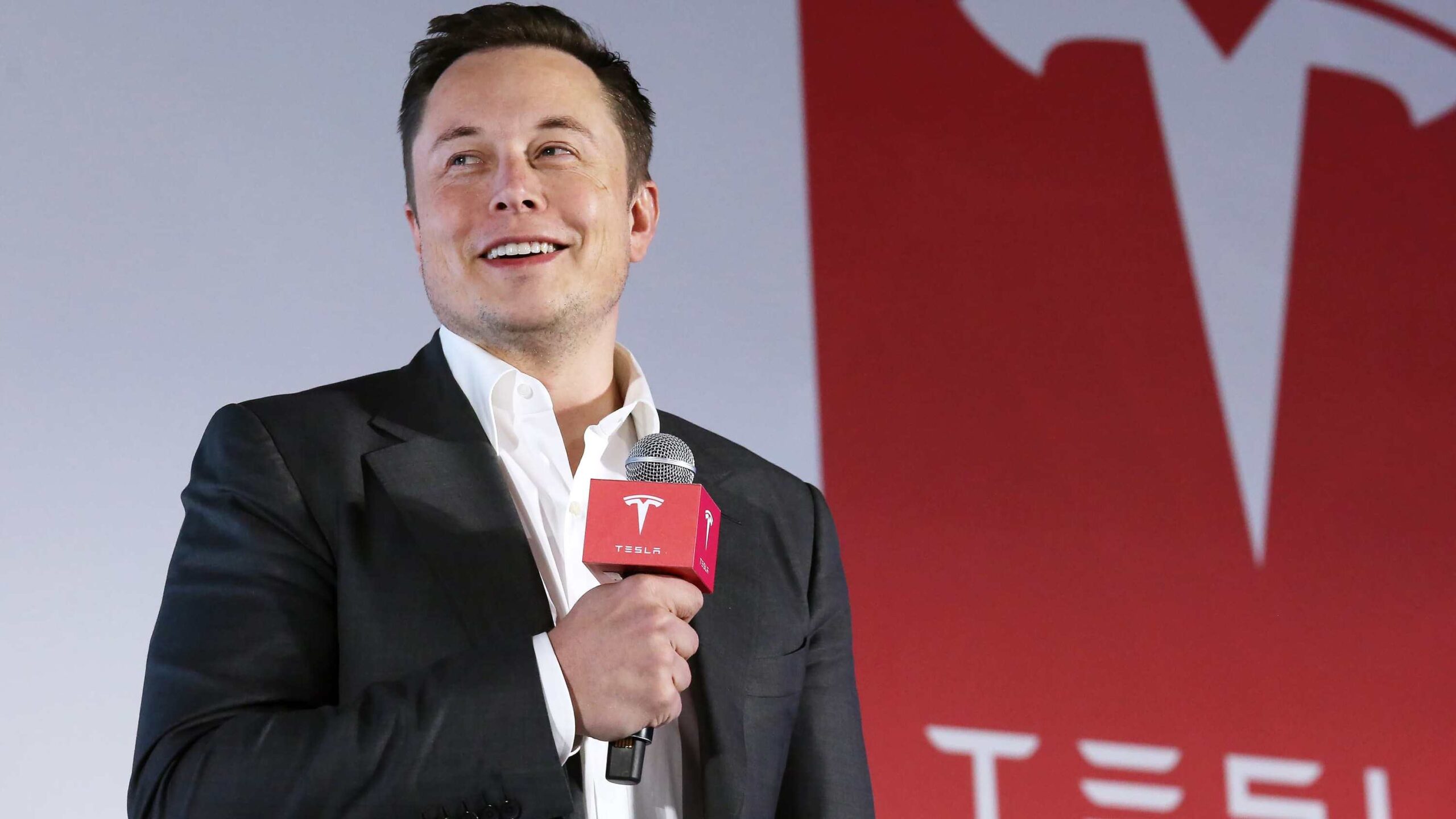
Elon Musk Unveils New Tesla Mega Projects That SHOCKED China: Technology is entering a new era where artificial intelligence, autonomous transportation, humanoid robots, brain-computer interfaces, and advanced space technology are evolving simultaneously. While many people focus on stock prices or the latest AI announcements, some of the world’s biggest engineering projects are quietly approaching commercialization.
From Tesla RoboTaxi and Neuralink to Tesla Optimus, next-generation batteries, and futuristic space transportation concepts, these innovations could reshape industries worth trillions of dollars. Here’s a detailed look at the technologies that may define the future of transportation, labor, healthcare, and space exploration.
The Rise of Tesla RoboTaxi: Ending Traditional Car Ownership
One of the most anticipated Tesla projects is the fully autonomous RoboTaxi network. For years, autonomous driving seemed like a distant goal, but recent developments suggest Tesla is moving closer to launching a commercial driverless transportation service.
Unlike many competitors that depend heavily on LiDAR sensors and detailed high-definition maps, Tesla has chosen a completely different strategy.
Tesla’s Pure Vision System
Tesla relies on high-resolution cameras, deep neural networks, and AI-powered vision processing instead of expensive LiDAR systems.
This approach closely mimics how humans drive. Roads were originally designed for people using their eyes—not laser scanners. Tesla believes AI can learn to interpret visual information the same way humans do, allowing vehicles to safely navigate almost anywhere without relying on pre-mapped roads.
The biggest advantage is global scalability. Since the system depends mainly on cameras and machine learning, Tesla can deploy autonomous vehicles in new cities without first creating costly 3D maps.
How RoboTaxi Could Transform Transportation
The economic impact of autonomous ride-hailing could be enormous.
Today, driver salaries account for nearly 60–70% of ride-hailing costs. Removing that expense dramatically lowers transportation costs, making autonomous rides significantly more affordable.
Tesla also wants to change the way people think about vehicle ownership.
Instead of leaving a personal car parked for over 23 hours every day, owners could allow it to join the RoboTaxi network whenever it’s not being used. The vehicle would transport passengers autonomously, earn revenue throughout the day, and return home automatically.
This concept transforms a depreciating asset into a cash-generating investment, creating an entirely new transportation economy.
Neuralink: Connecting the Human Brain to Artificial Intelligence
Another revolutionary project is Neuralink, Elon Musk’s brain-computer interface company.
Although early demonstrations have focused on helping individuals with paralysis control computers using only their thoughts, the company’s long-term vision is much more ambitious.
How Neuralink Works
Traditional brain-computer interfaces, such as EEG headsets, struggle because electrical signals weaken as they pass through the skull.
Neuralink solves this challenge by implanting over 1,000 ultra-thin flexible electrodes directly into the brain using a precision surgical robot.
These microscopic threads record electrical signals from neurons.
Instead of reading actual words or thoughts, Neuralink detects neural firing patterns associated with intended movements. Advanced machine learning algorithms gradually learn how each person’s brain communicates, allowing digital devices to respond almost instantly.
The Future of Brain-Computer Interfaces
As AI models become more advanced, brain-computer interfaces may eventually interpret increasingly complex neural activity.
Researchers envision future applications including:
Medical breakthroughs
- Restoring movement for paralysis patients
- Treating neurological disorders
- Improving communication for people with disabilities
Long-term possibilities
Scientists are also exploring concepts such as digital memory preservation, advanced cognitive enhancement, and detailed mapping of the human brain. Although true “mind uploading” remains theoretical, today’s research is laying the foundation for tomorrow’s neuroscience.
Tesla Optimus: Humanoid Robots That Could Transform Global Labor
Tesla’s Optimus humanoid robot has evolved far beyond a simple prototype.
Powered by advanced AI, computer vision, and large language models, Optimus is being developed to perform repetitive physical work across multiple industries.
Why Optimus Could Change the Economy
Tesla aims to manufacture Optimus at an estimated cost of $20,000–$30,000 per unit.
These robots could potentially operate 12 to 16 hours every day, performing tasks such as:
Warehouse automation
- Sorting inventory
- Loading materials
- Packaging products
Retail support
- Stocking shelves
- Cleaning facilities
- Customer assistance
Logistics
- Material transportation
- Distribution center operations
- Delivery support
If deployed successfully, a single Optimus robot could generate significant economic value annually, creating an entirely new business model known as Robotics-as-a-Service (RaaS).
Tesla is also expected to develop a software marketplace where owners can remotely assign robots to businesses requiring temporary labor, allowing robots to generate continuous income.
Tesla Cryocell: Revolutionizing Battery Technology
Battery technology remains one of the biggest challenges in electric vehicles.
High charging speeds generate heat, which accelerates battery degradation and shortens lifespan.
Tesla’s rumored Cryocell concept aims to solve this issue using Phase Change Materials (PCMs) integrated directly into battery cells.
Why Thermal Management Matters
Instead of allowing heat to build inside the battery, PCMs absorb thermal energy while changing physical state.
This process helps:
- Maintain stable battery temperatures
- Reduce internal damage
- Increase battery lifespan
- Enable dramatically faster charging
If successful, Cryocell technology could support grid-scale energy storage, autonomous transportation, and long-range electric vehicles with significantly improved durability.
The Space Elevator: A Revolutionary Approach to Space Travel
Launching payloads into orbit remains incredibly expensive because rockets must carry enormous amounts of fuel.
The Space Elevator offers a radically different solution.
How a Space Elevator Works
The concept involves constructing an ultra-strong cable extending from Earth’s equator beyond geostationary orbit to a massive counterweight in space.
Powered elevator climbers would travel along the cable using electrical energy instead of rocket fuel.
This approach could dramatically reduce launch costs while making orbital transportation far more efficient.
Although today’s materials are not yet strong enough for such a structure, ongoing research into advanced composites and nanomaterials continues to move the concept closer to reality.
Tesla Semi: Autonomous Freight Transportation
Tesla is also expanding autonomous driving into commercial trucking.
The Tesla Semi is being developed with specialized Full Self-Driving software designed specifically for heavy freight transportation.
Platooning Technology
One of the most promising innovations is truck platooning.
Multiple autonomous trucks communicate through ultra-low-latency networks while traveling only a few meters apart.
This synchronized driving reduces aerodynamic drag, improving energy efficiency by up to 25% while allowing freight vehicles to operate almost continuously without driver fatigue.
The result is faster deliveries, lower operating costs, and more efficient logistics networks.
SpaceX Aerofusion: The Future of Interplanetary Travel
Perhaps the most futuristic concept is the theoretical Aerofusion propulsion system.
Current chemical rockets require approximately six to nine months to reach Mars.
Fusion propulsion could reduce that journey dramatically.
How Fusion Propulsion Could Work
Instead of burning chemical fuel, fusion engines would use powerful magnetic fields to contain ultra-hot plasma created by nuclear fusion reactions.
The plasma would then be expelled through a magnetic nozzle, generating continuous thrust throughout the mission.
This system offers significantly higher specific impulse than conventional rockets, allowing spacecraft to accelerate for much longer periods.
If developed successfully, travel between Earth and Mars could potentially be reduced to just 14–20 days, fundamentally transforming space exploration and supporting the development of a future multi-planetary civilization.
Conclusion
The technologies emerging from Tesla, Neuralink, and SpaceX represent far more than incremental innovation. Together they envision a future built on autonomous transportation, AI-powered robotics, advanced battery systems, brain-computer interfaces, and next-generation space propulsion.
Many of these projects still face major engineering, regulatory, and scientific challenges. However, their combined potential could redefine global industries, reshape labor markets, lower transportation costs, accelerate renewable energy adoption, and even expand humanity beyond Earth.
Whether these ambitious visions unfold exactly as planned remains to be seen, but one thing is clear: the coming decade could witness one of the most significant technological transformations in modern history.
FAQs
1. What are Elon Musk’s new Tesla mega projects?
Elon Musk’s latest initiatives include Tesla RoboTaxi, Tesla Optimus humanoid robot, Neuralink brain-computer interface, Tesla Semi autonomous trucks, advanced battery technologies, and futuristic space transportation concepts through SpaceX.
2. What is Tesla RoboTaxi?
Tesla RoboTaxi is a fully autonomous ride-hailing service that uses AI-powered self-driving technology to transport passengers without a human driver. It aims to reduce transportation costs and maximize vehicle utilization.
3. How does Tesla’s Full Self-Driving (FSD) technology work?
Tesla’s Full Self-Driving (FSD) system primarily relies on high-resolution cameras, neural networks, and artificial intelligence instead of LiDAR. The AI analyzes real-world driving conditions and continuously improves through machine learning.
4. Why is Tesla using cameras instead of LiDAR?
Tesla believes that roads are designed for human vision, making a camera-based vision system more scalable and cost-effective than expensive LiDAR sensors that require detailed mapping.
5. How could RoboTaxi change car ownership?
Instead of remaining parked most of the day, privately owned Tesla vehicles could join the RoboTaxi network and generate income by providing autonomous rides whenever the owner is not using the vehicle.
6. What is Neuralink?
Neuralink is Elon Musk’s neurotechnology company developing brain-computer interfaces (BCIs) that allow users to control digital devices directly using brain signals.
7. What are the main benefits of Neuralink?
Neuralink could help restore communication for people with paralysis, improve treatments for neurological disorders, and potentially enable faster interaction between humans and computers.
8. What is Tesla Optimus?
Tesla Optimus is a humanoid robot designed to perform repetitive and physically demanding tasks in warehouses, factories, retail stores, and logistics operations using advanced AI.
9. How much could Tesla Optimus cost?
Tesla has suggested a long-term manufacturing target of approximately $20,000 to $30,000 per Optimus robot, although commercial pricing has not been officially confirmed.
10. What is Robotics-as-a-Service (RaaS)?
Robotics-as-a-Service (RaaS) is a business model where companies or individuals deploy robots for commercial work and earn revenue from automated labor instead of purchasing human labor.
11. What is Tesla Cryocell technology?
Tesla Cryocell is a rumored next-generation battery concept focused on improving thermal management using advanced cooling materials to enable faster charging, longer battery life, and improved efficiency.
12. What is the Space Elevator concept?
A Space Elevator is a theoretical transportation system that uses a massive cable extending from Earth into space, allowing payloads to reach orbit without traditional rockets and significantly reducing launch costs.
13. What is Tesla Semi Platooning?
Tesla Semi Platooning is an autonomous trucking system where multiple self-driving trucks travel closely together using synchronized AI communication, reducing aerodynamic drag and improving fuel or energy efficiency.
14. What is the SpaceX Aerofusion propulsion concept?
Aerofusion is a theoretical fusion-powered spacecraft propulsion system that could dramatically shorten travel time to Mars by providing continuous thrust instead of relying solely on chemical rockets.
15. Are these Tesla and SpaceX projects available today?
Some technologies, such as Tesla Full Self-Driving, Tesla Semi, Neuralink clinical trials, and Optimus prototypes, are currently under development or limited testing, while concepts like the Space Elevator and Aerofusion remain theoretical.
16. How could these technologies impact the future?
If successfully developed and widely adopted, these innovations could transform transportation, healthcare, manufacturing, robotics, renewable energy, and space exploration, creating entirely new industries and changing how people live and work.
Read More:
- Elon Musk outlines Tesla Optimus production expectations
- Tesla expands Robotaxi to Florida, marking its third state for autonomy
- Tesla Semi involved in first known fatal crash in Nevada
- Tesla’s strong Q2 deliveries: Four key drivers behind the surprise
- Tesla Semi 2.0 Just Upgraded A Major Feature & New Cabin
1 thought on “Elon Musk Unveils New Tesla Mega Projects That SHOCKED China”