
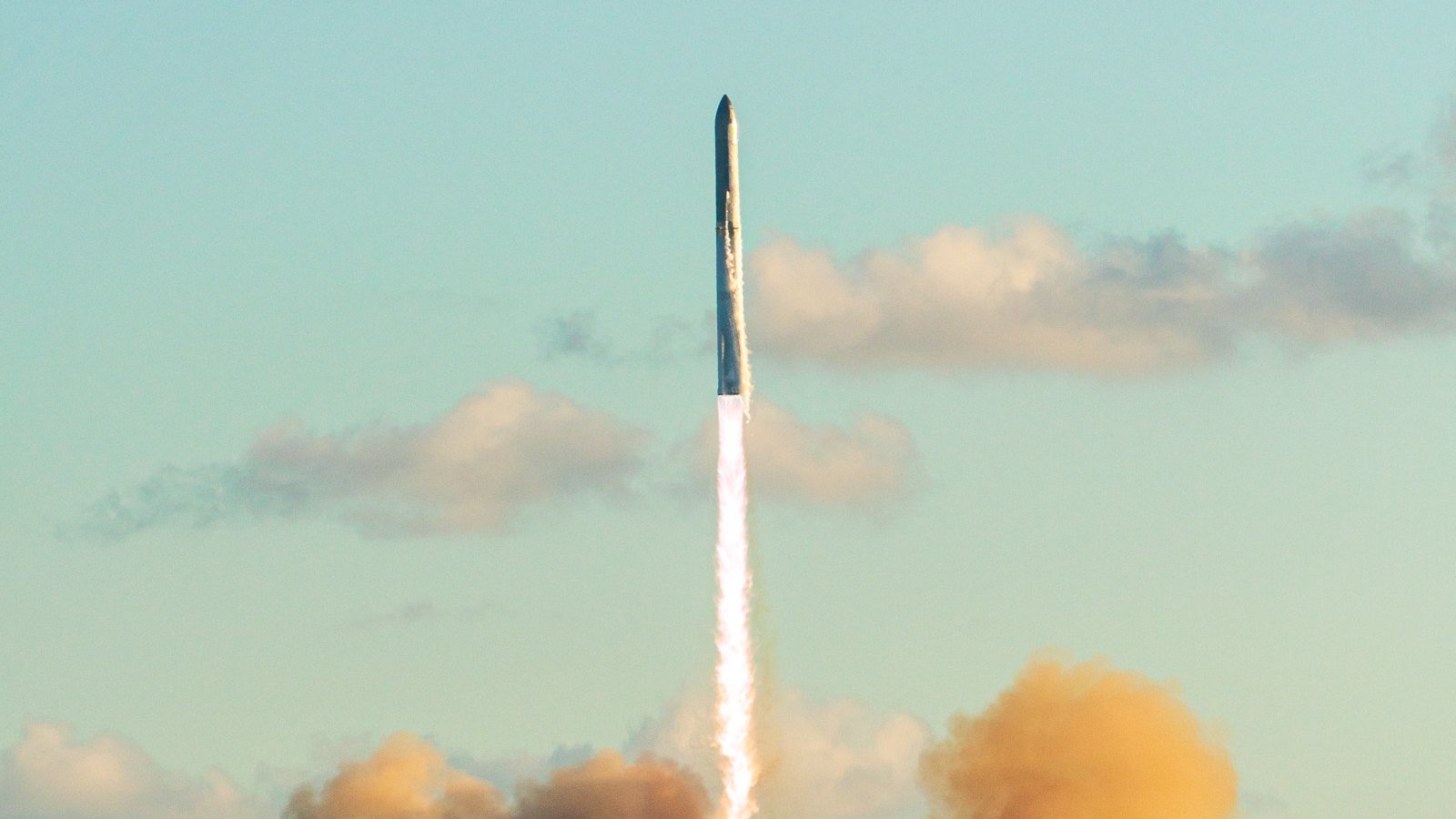
SpaceX Starship Flight 13’s Massive Surprise Success Destroyed the Industry: The commercial space industry reached another historic milestone as SpaceX Starship Flight 13 successfully completed one of its most ambitious test missions. After overcoming technical setbacks, software revisions, and hardware upgrades, Flight 13 delivered exceptional performance from launch to splashdown, proving that SpaceX is rapidly moving toward a fully reusable launch system.
What makes this mission even more remarkable is that it wasn’t just about reaching space. Flight 13 tested new thermal protection technologies, advanced engine ignition systems, in-space payload deployment, orbital engine relights, and improved re-entry capabilities. At the same time, China’s commercial aerospace sector demonstrated its own progress with the successful launch of OrienSpace’s Gravity-1 sea-based rocket.
Here’s everything you need to know about why Starship Flight 13 could become one of the most important space missions of the decade.
SpaceX Finally Solved the Flight 13 Launch Problems
Before Flight 13 could make history, SpaceX had to overcome a major obstacle.
During the original launch attempt on July 16, 2026, four Super Heavy Raptor engines automatically shut down during startup. Engineers traced the issue to unexpected pressure fluctuations inside the liquid oxygen (LOX) turbo-pumps.
Instead of rushing another launch attempt, SpaceX engineers carefully analyzed the data and introduced several improvements, including:
- Updated engine controller firmware
- Improved ignition timing software
- Revised chilled propellant conditioning procedures
- Better pressure management during turbo-pump spin-up
These upgrades paid off.
When Flight 13 lifted off on July 24, 2026, all 33 Raptor engines ignited perfectly, delivering one of the cleanest Super Heavy launches ever recorded. The successful ignition proved that the turbo-pump modifications had effectively solved the earlier reliability concerns.
Flight 13 Tested Starship Under Extreme Stress
Unlike previous missions, Flight 13 wasn’t designed to follow the easiest path to space.
Instead, SpaceX intentionally modified the flight profile to expose Starship to higher aerodynamic forces. The objective was to better understand how the spacecraft behaves under extreme structural loads.
New Load-Sensing Heat Shield Technology
One of the biggest upgrades was the installation of load-sensing Thermal Protection System (TPS) tiles.
Traditional ceramic heat shield tiles can crack when the vehicle flexes during ascent or re-entry. The new design uses:
- Flexible mounting pins
- Improved backing materials
- Better stress absorption
These improvements allow the vehicle’s stainless-steel body to flex naturally while keeping the heat shield securely attached.
This technology represents a major step toward creating a spacecraft capable of flying repeatedly with minimal refurbishment.
Perfect Hot Staging Demonstrated Improved Engine Control
One of the most difficult phases of any Starship mission is hot staging, where the upper stage ignites before separating from the booster.
During Flight 13:
- 28 booster engines shut down
- 5 Raptors remained active
- Three inner engines and two middle-ring engines maintained vehicle stability.
Meanwhile, the upper stage executed a carefully planned ignition sequence.
First, the three vacuum-optimized Raptor engines ignited in the thin upper atmosphere.
Moments later, the three sea-level Raptors started sequentially while carefully aligning their thrust vectors with the spacecraft’s center of mass.
This precise choreography minimized structural stress and delivered one of Starship’s smoothest stage separations to date.
Starlink Deployment Was Faster Than Ever
After reaching suborbital velocity, Starship opened its payload bay approximately 17 minutes into the mission.
Using SpaceX’s internal PEZ dispenser system, the spacecraft deployed Starlink Version 3 satellites at an impressive rate of approximately two satellites every minute.
The deployment continued for more than 10 minutes, showcasing the efficiency of SpaceX’s latest payload delivery system.
Interestingly, several test satellites carried high-resolution optical cameras that photographed the underside of Starship during flight.
These images will help engineers study:
- Heat shield performance
- Tile condition
- Thermal stress
- Vehicle aerodynamics
Collecting real-world imagery during spaceflight provides invaluable data for future reusable spacecraft designs.
Flight 13 Achieved Its Longest In-Space Raptor Burn
One of the most important objectives came later in the mission.
Approximately 39 minutes after launch, SpaceX restarted a single sea-level Raptor engine while Starship was still in space.
The engine burned continuously for 15 seconds, becoming the longest in-space Raptor engine burn achieved by the Starship program.
This successful relight validates a capability that will be critical for future missions involving:
Orbital deorbit burns
Future Starship flights must safely return from orbit.
Moon missions
NASA’s Artemis program depends on reliable engine restarts.
Mars transportation
Multiple engine relights will eventually become essential during interplanetary missions.
The flawless performance demonstrated increasing confidence in Starship’s propulsion system.
Re-entry Was One of Starship’s Biggest Victories
Returning from space remains one of the greatest engineering challenges.
Flight 13 entered Earth’s atmosphere over the Indian Ocean at approximately Mach 25.
During this intense phase, the upgraded heat shield successfully protected:
- Internal fuel tanks
- Avionics systems
- Structural components
Meanwhile, Starship’s forward and aft flaps continuously adjusted the vehicle’s orientation to control heating and maintain stability.
The new TPS system showed significantly improved durability throughout peak thermal loading.
A Perfect Landing Burn and Soft Splashdown
As Starship descended toward the ocean, onboard computers initiated the landing sequence at roughly 1.1 kilometers altitude while traveling nearly 365 km/h.
The landing procedure unfolded exactly as planned.
Sequential Raptor Ignition
All three sea-level Raptors ignited one after another.
Belly-Flop Recovery
Thrust vectoring smoothly rotated Starship from its horizontal “belly-flop” position into a fully vertical orientation.
Gentle Ocean Landing
The spacecraft then completed a remarkably controlled vertical splashdown.
Unlike previous prototypes that often broke apart after water impact, Flight 13 remained structurally intact.
Starship Floated After Landing
Perhaps the biggest surprise came after splashdown.
Instead of sinking or breaking apart, Starship continued floating upright in the Indian Ocean.
Even more impressively, the spacecraft kept transmitting:
- Live telemetry
- Camera feeds
- Engineering data
Although engineers observed:
- Minor heat shield erosion
- Small fires near the nose cone
the stainless-steel structure remained intact.
This demonstrates enormous progress toward SpaceX’s long-term goal of catching Starship using the massive Mechazilla launch tower arms.
China’s Gravity-1 Is Changing Commercial Launches
While SpaceX focused on reusable heavy-lift systems, China made major progress in sea-based commercial launches.
Chinese aerospace company OrienSpace successfully launched the Gravity-1 (Yinli-1) rocket from an offshore platform near Shanghai.
Gravity-1 achieved several milestones.
Successful Satellite Deployment
The rocket delivered nine satellites into Low Earth Orbit (LEO), including:
- Six Dongpo satellites
- Siuang-2 hyperspectral satellite
- Experimental flat-panel spacecraft
World’s Most Powerful Operational Solid Rocket
Standing approximately 30 meters tall, Gravity-1 uses:
- Three solid-fuel core stages
- Four large strap-on boosters
This architecture makes it the most powerful operational solid-fuel rocket currently flying.
Advantages of Sea-Based Launches
Launching from offshore platforms offers several benefits:
- Greater launch flexibility
- No overland debris restrictions
- Higher launch frequency
- Easier international launch trajectories
China plans to use these technologies for future Gravity-2 and Gravity-3 launch vehicles.
Why Flight 13 Changes Everything
Flight 13 wasn’t simply another Starship test—it demonstrated meaningful progress across nearly every major system.
Key achievements included:
- Successful ignition of all 33 Raptor booster engines
- Resolution of previous turbo-pump startup issues
- Advanced load-sensing thermal protection system validation
- Highly stable hot-staging performance
- Rapid Starlink V3 satellite deployment
- Record-setting in-space Raptor engine relight
- Controlled Mach 25 atmospheric re-entry
- Smooth vertical splashdown
- A structurally intact Starship that continued transmitting telemetry after landing
Together, these accomplishments move SpaceX closer to its vision of a fully reusable spacecraft capable of supporting frequent orbital missions, lunar exploration, and eventually human journeys to Mars.
Final Thoughts
SpaceX Starship Flight 13 represents a major leap forward in reusable spaceflight technology. By overcoming earlier engine issues, validating new thermal protection systems, achieving a record in-space engine relight, and surviving re-entry with an intact floating spacecraft, SpaceX demonstrated substantial progress toward routine, low-cost access to space.
At the same time, China’s OrienSpace Gravity-1 highlighted how sea-based launch operations are becoming an increasingly important part of the global aerospace landscape. As competition accelerates and launch technologies mature, innovations from both reusable heavy-lift vehicles and mobile offshore launch systems are likely to shape the next era of commercial space exploration.
FAQs
1. What was the main objective of SpaceX Starship Flight 13?
The primary goal of SpaceX Starship Flight 13 was to validate several critical technologies, including improved Raptor engine reliability, upgraded thermal protection systems (TPS), payload deployment, in-space engine relight, and controlled atmospheric re-entry. The mission also gathered valuable data for future fully reusable Starship flights.
2. Why was the first Flight 13 launch attempt delayed?
The initial launch attempt was scrubbed after four Super Heavy Raptor engines automatically shut down during startup due to liquid oxygen (LOX) turbo-pump pressure anomalies. SpaceX engineers updated the engine software and ignition procedures before successfully launching on July 24, 2026.
3. How many Raptor engines powered Starship Flight 13?
The Super Heavy booster successfully ignited all 33 Raptor engines, delivering one of the cleanest and most reliable launches in the Starship program’s history.
4. What improvements were made to the Raptor engines?
SpaceX introduced software revisions, improved engine controller firmware, optimized propellant conditioning procedures, and refined the ignition sequence to eliminate turbo-pump startup issues that caused the previous launch scrub.
5. What is the new Load-Sensing Thermal Protection System (TPS)?
The Load-Sensing TPS is an upgraded heat shield design featuring flexible mounting pins and backing materials that allow Starship’s stainless-steel structure to flex during flight without causing heat shield tiles to crack or detach.
6. What is hot staging, and why is it important?
Hot staging is the process where the upper stage ignites its engines before completely separating from the booster. This technique improves efficiency and reduces gravity losses during ascent, making Starship more effective for future orbital missions.
7. How did Starship deploy its Starlink satellites?
Starship used its internal PEZ dispenser mechanism to release Starlink Version 3 satellites at an impressive rate of approximately two satellites per minute, making it one of the fastest deployment demonstrations by the vehicle.
8. Why were cameras installed on some Starlink satellites?
Several test satellites carried high-resolution cameras that photographed Starship’s underside and heat shield during flight. These images help engineers analyze tile performance, thermal stress, and vehicle condition in space.
9. What made the in-space Raptor engine relight significant?
Flight 13 successfully restarted a single sea-level Raptor engine in space for 15 continuous seconds, marking the longest in-space Raptor burn achieved so far. This capability is essential for orbital maneuvering, deorbit burns, and future Moon and Mars missions.
10. How fast did Starship re-enter Earth’s atmosphere?
Starship entered Earth’s atmosphere at approximately Mach 25, relying on its upgraded heat shield and active aerodynamic flaps to survive the extreme temperatures generated during re-entry.
11. Did Starship successfully land after re-entry?
Yes. Starship completed a controlled vertical splashdown in the Indian Ocean, using all three sea-level Raptor engines during its landing burn before touching down gently on the water.
12. Did Starship survive after splashdown?
Unlike several previous prototypes, Starship Flight 13 remained structurally intact and floated upright after landing. It continued transmitting telemetry and live camera feeds long after splashdown.
13. What damage did Starship sustain during the mission?
The spacecraft experienced minor heat shield tile erosion and localized fires near the nose cone, but its primary stainless-steel structure remained intact, demonstrating major improvements in durability.
14. What is Mechazilla, and how does Flight 13 help?
Mechazilla is SpaceX’s giant launch tower equipped with mechanical arms designed to catch Starship and its Super Heavy booster instead of landing them on traditional pads. Flight 13’s successful structural performance brings the company closer to achieving this goal.
15. What is OrienSpace Gravity-1?
Gravity-1 is a solid-fuel commercial rocket developed by China’s OrienSpace. It successfully launched nine satellites into Low Earth Orbit from a mobile offshore platform, demonstrating China’s growing commercial launch capabilities.
16. Why are sea-based rocket launches becoming more popular?
Sea-based launch platforms provide greater flexibility by avoiding overland safety restrictions, enabling more launch opportunities, supporting higher launch frequencies, and allowing operators to optimize flight paths from international waters.
17. Why is SpaceX Starship Flight 13 considered a major milestone?
Starship Flight 13 showcased major advancements in engine reliability, heat shield technology, hot staging, satellite deployment, in-space engine relight, atmospheric re-entry, and post-landing survivability. These achievements bring SpaceX significantly closer to operating a fully reusable spacecraft for routine missions to Earth orbit, the Moon, and eventually Mars.
Read More:
- Massive Tesla Giga Press 4.0 Detroys All Welding Robots
- What SpaceX Starship Flight 13 just Did Shocked whole Industry. Musk Declared
- Tesla stock tumbles after earnings, one of its sharpest single-day declines
- SpaceX Starship Flight 13 faces wrath of the Texas skies
- Tesla door handle saga gets its latest chapter and a big change is coming