
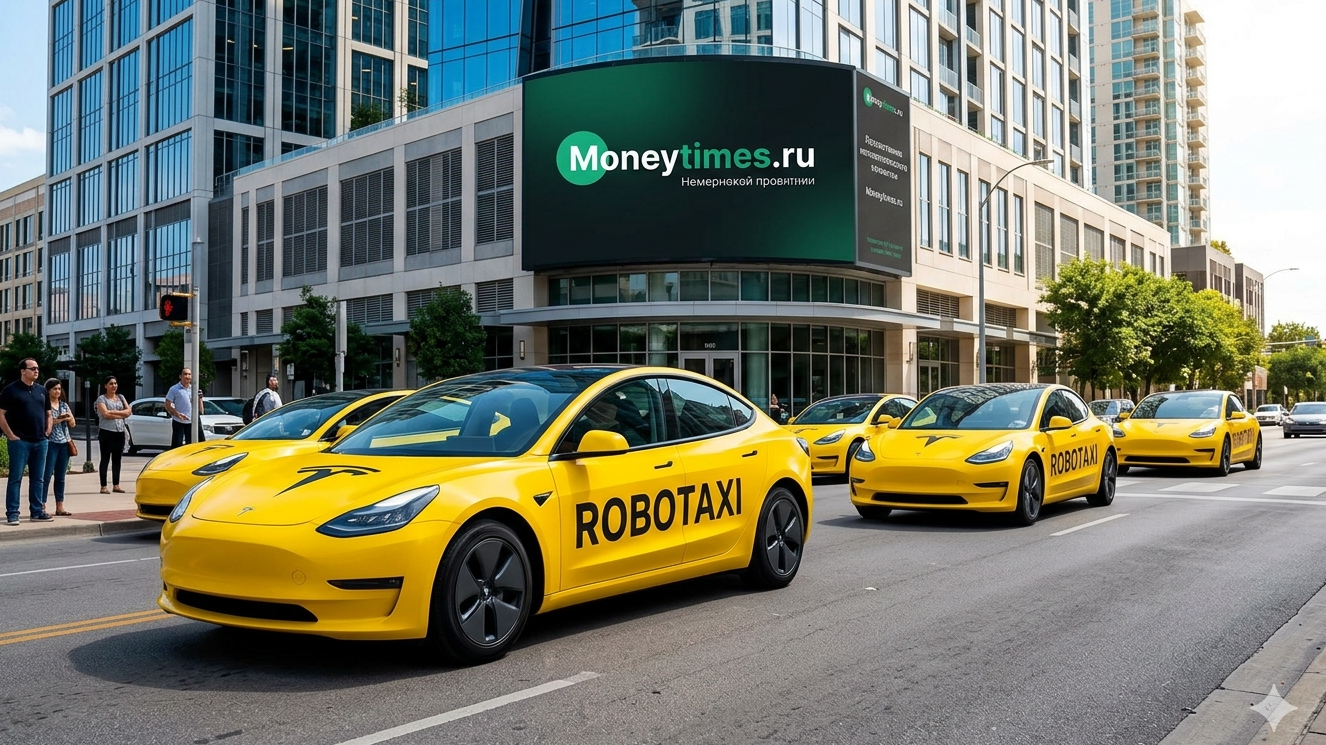
Tesla’s Robotaxi Just Did Something Insane: The world of technology is entering a completely new era, and few companies are moving faster than the ventures led by Elon Musk. From autonomous transportation and electric freight systems to robotic brain surgery and the dream of colonizing Mars, the latest breakthroughs in 2026 are no longer theoretical experiments. They are becoming real-world systems operating at scale.
What makes this moment different is that these technologies are no longer stuck in the “future concept” phase. Instead, they are rapidly transitioning into mass adoption. Tesla’s Full Self-Driving system has crossed 10 billion real-world miles, Robotaxis are beginning unsupervised operations across Texas, Neuralink is scaling robotic brain surgeries, and SpaceX is tying its future valuation directly to building a human civilization on Mars.
This shift signals one massive trend: artificial intelligence is no longer just assisting humans—it is beginning to operate independently in transportation, medicine, logistics, and even space exploration.
In this article, we will break down the most important developments shaping the future of Elon Musk’s empire and explain why these breakthroughs could permanently transform human society.
Tesla Reaches 10 Billion Miles of Full Self-Driving Data
Tesla has officially crossed an astonishing milestone: 10 billion miles driven using supervised Full Self-Driving (FSD) technology.
To understand the scale of this achievement, imagine driving from Earth toward the outer edge of the solar system. That is the level of data Tesla has accumulated through real-world driving.
Why 10 Billion Miles Matters
Most autonomous driving companies rely heavily on simulations and controlled environments. Tesla chose a radically different strategy.
Instead of creating synthetic driving scenarios, Tesla allowed millions of drivers around the world to generate real-world training data every day.
Real-World AI Learning
Every Tesla on the road acts like a rolling AI training machine. Each trip helps Tesla’s neural networks learn:
- Human driving behavior
- Complex road conditions
- Unexpected pedestrian actions
- Weather-related visibility problems
- Construction zones and traffic irregularities
This real-world learning model has become Tesla’s greatest competitive advantage.
While simulation-based systems can prepare for predictable situations, Tesla’s approach exposes the AI to genuine chaos—the kind of unpredictability human drivers face every day.
Tesla’s Safety Argument Is Getting Stronger
Back in 2016, Elon Musk suggested Tesla would need approximately 6 billion miles of driving data to statistically demonstrate that FSD is safer than human drivers.
Now, with over 10 billion miles recorded, Tesla has far exceeded that target.
This creates a powerful regulatory argument:
- More data means more evidence
- More evidence means improved safety validation
- Improved validation increases government approval chances
The company now possesses one of the largest autonomous driving datasets ever created.
Global Regulators Are Starting to Approve Tesla FSD
One of the biggest barriers to autonomous driving has always been regulation. Governments traditionally move cautiously when public safety is involved.
However, 2026 is showing signs of major momentum.
The Netherlands Approves Tesla FSD Supervised
The Dutch vehicle regulator, RDW, has officially approved Tesla FSD Supervised.
The agency concluded that the technology contributes positively to road safety when proper driver monitoring is used.
This approval is significant because Europe has historically maintained stricter automotive regulations than many other regions.
Why Europe Matters
If Tesla succeeds in Europe, it creates a domino effect:
- Other EU nations may follow
- Regulatory confidence increases globally
- Insurance companies become more supportive
- Consumer trust rises dramatically
For Tesla, Europe could become one of the most important autonomous driving markets in the world.
Tesla Expands FSD in China
China has also approved a partial release of Tesla FSD Supervised.
This development is enormous because China represents one of Tesla’s largest and most competitive markets.
Initial owner feedback has reportedly been extremely positive, particularly regarding:
- City navigation
- Highway merging
- Traffic management
- Lane changes in dense urban environments
China’s approval also signals increasing confidence in Tesla’s AI-driven transportation systems.
Tesla’s Robotaxi Just Changed the Transportation Industry
The real breakthrough is not supervised driving.
The true revolution begins with unsupervised Robotaxis.
Once a Tesla can operate without a human driver, the economics of transportation fundamentally change forever.
From Personal Car to Income-Producing Asset
Traditionally, cars lose value over time while sitting parked most of the day.
Tesla’s Robotaxi vision flips that model upside down.
Instead of remaining idle, a Tesla can become:
- A self-driving taxi
- A delivery vehicle
- A transportation service operating 24/7
- A revenue-generating machine
This could completely reshape vehicle ownership economics.
The Beginning of the Robotaxi Network
Tesla has already begun expanding unsupervised operations in Texas.
Initially concentrated in Austin, the fleet has now spread to:
- Houston
- Dallas
- Additional surrounding areas
This expansion suggests Tesla is moving from testing into early-scale deployment.
Unsupervised Teslas Are Growing Exponentially
Community tracking data indicates that Tesla’s fully autonomous fleet is entering rapid growth mode.
The Vertical Growth Curve
For months, Robotaxi growth appeared relatively flat.
Then suddenly, the number of unsupervised Model Y vehicles operating independently began increasing sharply.
This kind of “vertical curve” is often seen when technologies move from experimentation to scalability.
Once infrastructure, software reliability, and operational systems align, growth accelerates rapidly.
Why This Is So Important
History shows that exponential growth technologies tend to reshape industries very quickly.
Examples include:
- Smartphones
- Cloud computing
- Internet adoption
- AI language models
Robotaxis may now be entering that same phase.
Tesla Solved One of the Hardest Challenges: Night Driving
One particularly important milestone involves nighttime autonomous operations.
Approximately 36 fully unsupervised Tesla vehicles are now reportedly operating during nighttime conditions.
Why Night Driving Is Difficult for AI
Night driving introduces several complications:
- Reduced visibility
- Headlight glare
- Shadows and reflections
- Pedestrian detection challenges
- Rain-related visual distortion
Humans struggle with these conditions—and AI systems struggle even more.
The fact that Tesla is deploying unsupervised nighttime vehicles suggests major confidence in the maturity of its vision-based AI system.
California Introduces Robotaxi Accountability Laws
As Robotaxis become more common, lawmakers are adapting quickly.
California plans to implement a major new policy beginning July 1st, 2026.
Robotaxis Will Receive Traffic Tickets
Under the new rules:
- Autonomous vehicles can be ticketed for violations
- Manufacturers become financially responsible
- Companies like Tesla may pay fines directly
This represents a huge shift in legal accountability.
Why This Law Matters
The legislation accomplishes several things:
- Encourages safer autonomous driving systems
- Creates transparency for the public
- Establishes legal frameworks for AI transportation
- Pushes companies toward higher operational standards
Rather than slowing down autonomous technology, this could actually accelerate public trust.
Tesla Semi Is Quietly Transforming the Trucking Industry
While Robotaxis receive most headlines, Tesla’s electric freight strategy may become equally disruptive.
The trucking industry has long been dependent on diesel fuel because heavy transportation requires massive energy capacity.
Tesla’s Semi is attempting to solve that challenge through efficiency and charging infrastructure.
Tesla Semi Efficiency Is Shockingly High
The Tesla Semi reportedly consumes less than 1.7 kilowatt-hours per mile.
That makes it approximately three times more energy efficient than traditional diesel trucks.
The Financial Impact Is Massive
Operating costs could drop dramatically:
- Diesel truck: roughly 80 cents per mile
- Tesla Semi: approximately 23 cents per mile
For logistics companies operating thousands of miles weekly, this difference becomes enormous.
Over time, the savings could completely alter freight economics.
Tesla’s Two-Tier Charging Strategy
Tesla understands that electric trucking cannot succeed without proper charging systems.
To solve this, the company is building two separate charging solutions.
The Mega Charger
Tesla’s Mega Charger delivers an astonishing 1.2 megawatts of power.
This allows the Semi to recover approximately 60% of its range in just 30 minutes.
Perfect Timing for Truck Drivers
This charging time aligns closely with mandatory driver rest breaks.
That means drivers can recharge without significantly affecting delivery schedules.
For long-haul transportation, this synchronization is critical.
The Base Charger Is Built for Warehouses
Tesla also plans to release a more affordable Base Charger system in early 2027.
Priced around $40,000, these chargers provide overnight charging at warehouses and distribution centers.
This mirrors how diesel fleets already operate with private fueling depots.
The strategy is smart because it integrates into existing logistics workflows instead of forcing companies to completely redesign operations.
Neuralink Is Moving From Experiment to Medical Platform
Another major breakthrough in 2026 comes from Neuralink.
The company’s focus is no longer simply proving that brain-computer interfaces work.
Now the challenge is scalability.
The Surgical Robot Is the Real Innovation
Neuralink’s robotic surgery system may be even more important than the brain implant itself.
Why?
Because inserting tiny threads into the brain requires precision beyond human capability.
Threads Thinner Than Human Hair
Engineers compare the process to planting a single strand of hair into gelatin.
Even tiny hand movements could cause errors.
Humans alone cannot consistently achieve that level of microscopic precision.
Neuralink Uses Advanced OCT Vision Technology
To solve this problem, Neuralink uses Optical Coherence Tomography (OCT).
This imaging system acts almost like high-tech X-ray vision.
Avoiding Blood Vessels in Real Time
The robot can detect tiny blood vessels beneath the brain’s surface and adjust placement instantly.
This reduces:
- Bleeding risk
- Tissue damage
- Surgical complications
- Recovery time
The result is safer and more reliable brain surgery.
Automation Could Scale Brain Surgery Worldwide
One of Neuralink’s biggest goals is removing surgery dependence on elite specialists.
Why Automation Matters
Normally, advanced brain procedures rely heavily on the individual skill of surgeons.
That creates scalability problems because highly specialized neurosurgeons are limited in number.
Neuralink’s robotic system changes this dynamic.
By automating the most difficult parts of surgery, procedures can become:
- Faster
- More consistent
- Easier to replicate globally
- More accessible to patients
This could dramatically accelerate adoption of brain-computer interfaces over the next decade.
SpaceX Is Pursuing a $7.5 Trillion Future
Perhaps the most ambitious development involves SpaceX.
The company has tied Elon Musk’s compensation directly to achieving humanity’s expansion beyond Earth.
The Mars Colony Goal
To receive his full compensation package, Musk must help SpaceX achieve:
- A $7.5 trillion valuation
- A permanent human settlement on Mars
- A Martian population of at least 1 million people
This may sound unbelievable today, but it demonstrates the company’s long-term strategic direction.
Starship Is Central to the Mission
Every major SpaceX initiative revolves around one objective:
Making humanity multi-planetary.
Why Starship Matters
The Starship system is designed to dramatically reduce the cost of space transportation.
If successful, it could enable:
- Large-scale cargo transport to Mars
- Human colonization missions
- Space-based manufacturing
- Long-term planetary infrastructure
Without affordable reusable rockets, Mars colonization would remain impossible.
Starship is intended to solve that problem.
The Bigger Picture: AI Is Becoming Infrastructure
The most important takeaway from all these developments is that AI is no longer just software.
It is becoming infrastructure.
Tesla is embedding AI into transportation.
Neuralink is embedding AI into healthcare.
SpaceX is embedding AI into planetary expansion.
The Shift From Tools to Autonomous Systems
For years, technology mainly acted as a tool humans controlled directly.
Now systems are beginning to operate independently:
- Cars drive themselves
- Robots perform surgery
- Logistics networks optimize automatically
- Spacecraft land autonomously
This is one of the largest technological transitions in human history.
Final Thoughts
The latest developments across Tesla, Neuralink, and SpaceX reveal a common pattern: scale.
These companies are no longer simply proving concepts in laboratories. They are deploying real-world systems designed to affect millions—and eventually billions—of people.
Tesla’s Robotaxi network could redefine transportation economics.
The Tesla Semi could reshape global freight logistics.
Neuralink could revolutionize neurological medicine.
SpaceX could ultimately redefine humanity’s place in the universe.
Whether these ambitions fully succeed or not, one thing is becoming increasingly clear:
The technologies once considered science fiction are rapidly becoming operational reality.
FAQs
1. What is Tesla Full Self-Driving (FSD)?
Tesla Full Self-Driving (FSD) is an advanced AI-powered driving system designed to help Tesla vehicles navigate roads, change lanes, park, and respond to traffic with minimal human input. The system continues learning using real-world driving data collected from millions of Tesla vehicles.
2. Why is Tesla’s 10 billion mile milestone important?
The 10 billion FSD miles milestone is significant because it provides Tesla with one of the world’s largest autonomous driving datasets. This helps improve AI accuracy, supports safety claims, and strengthens Tesla’s position with global regulators.
3. Is Tesla Robotaxi fully autonomous?
Tesla’s Robotaxi system is moving toward fully autonomous operation. In some areas of Texas, unsupervised Tesla vehicles are already operating without direct human intervention, signaling the beginning of large-scale autonomous transportation.
4. How does Tesla Robotaxi make money for owners?
Tesla plans to allow owners to add their vehicles to a Robotaxi Network. Instead of sitting parked, the car can provide rides autonomously and generate income for the owner.
5. Which cities currently have Tesla Robotaxi operations?
Tesla’s autonomous operations have reportedly expanded across parts of Texas, including:
- Austin
- Houston
- Dallas
The company is expected to continue expanding into more cities over time.
6. Why is nighttime autonomous driving difficult?
Nighttime driving creates challenges such as:
- Reduced visibility
- Headlight glare
- Rain reflections
- Pedestrian detection issues
Tesla’s ability to operate unsupervised vehicles at night suggests major improvements in its vision-based AI system.
7. What are California’s new Robotaxi laws?
Starting in July 2026, California plans to allow autonomous vehicles to receive traffic violations like human drivers. In many cases, the manufacturer, such as Tesla, could become financially responsible for fines.
8. What makes the Tesla Semi different from diesel trucks?
The Tesla Semi is an electric truck designed for higher efficiency and lower operating costs. It reportedly uses less than 1.7 kWh per mile, making it significantly more efficient than traditional diesel-powered freight trucks.
9. How much money can companies save using Tesla Semi?
Operating costs for a Tesla Semi are estimated at around 23 cents per mile, compared to roughly 80 cents per mile for diesel trucks. This could save logistics companies millions annually.
10. What is Tesla’s Mega Charger?
The Tesla Mega Charger is a high-powered charging system delivering up to 1.2 megawatts of power. It can recharge approximately 60% of the Tesla Semi’s range in 30 minutes.
11. What is Neuralink?
Neuralink is a neurotechnology company focused on creating brain-computer interfaces (BCIs) that allow communication between the human brain and computers.
12. How does Neuralink’s surgical robot work?
Neuralink’s robot inserts ultra-thin threads into the brain with extreme precision. It uses Optical Coherence Tomography (OCT) technology to detect blood vessels and avoid damaging sensitive brain tissue during surgery.
13. Why is Neuralink’s robotic surgery important?
The robotic system helps remove the limitations of human surgical precision. This could make brain-computer interface procedures:
- Faster
- Safer
- More consistent
- Scalable worldwide
14. What is SpaceX’s long-term goal?
SpaceX aims to make humanity a multi-planetary species by building a permanent human settlement on Mars using reusable spacecraft like Starship.
15. Why is Starship important for Mars colonization?
The Starship rocket system is designed to dramatically reduce the cost of space travel. It could transport humans, cargo, and infrastructure needed for long-term Mars missions.
16. How are Tesla, Neuralink, and SpaceX connected?
All three companies are connected through Elon Musk’s broader vision of using artificial intelligence, automation, and advanced engineering to transform transportation, healthcare, and space exploration on a global scale.
Read More:
- SpaceX officially Confirmed Starship Launch in Days after Fixing Pad Problems, But New Lawsuit!?
- Tesla Cybertruck too safe for even Musk’s biggest critics to ignore
- Tesla Semi hauls fresh Cybercab batch as Robotaxi era takes hold
- Tesla is seeing record sales rebounds in key markets globally
- Tesla to fix 219k vehicles in recall with simple software update