
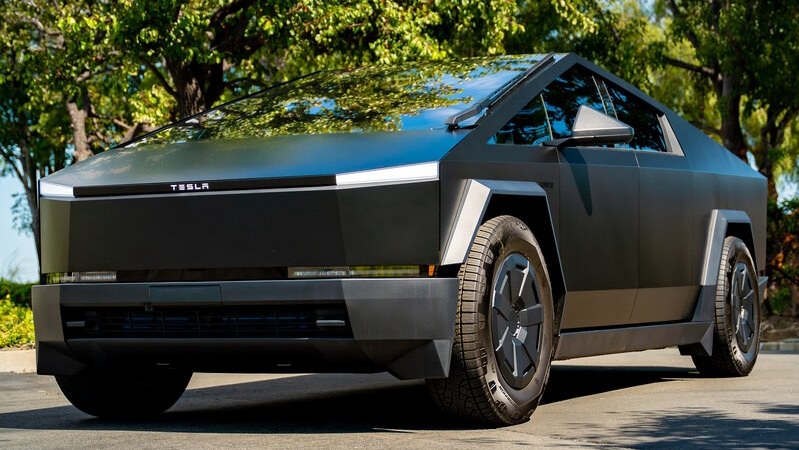
The Tesla Cybertruck has traveled a remarkable journey from being one of the most controversial vehicle concepts in automotive history to becoming a strategic pillar in Tesla’s growing ecosystem. Once viewed primarily as a futuristic electric pickup designed for technology enthusiasts and early adopters, the Cybertruck is now expanding into multiple sectors simultaneously.
From law enforcement deployments at the FIFA World Cup 2026 to the launch of a more affordable $59,000 AWD model, Tesla is transforming the Cybertruck into a vehicle that serves both specialized government operations and everyday consumers. Alongside these developments, major changes in Full Self-Driving (FSD) policies, a rapidly evolving used Cybertruck market, and the introduction of advanced autonomous features like Actually Smart Summon (ASS) are reshaping the Cybertruck’s future.
This evolution signals something much bigger than a new vehicle launch. Tesla appears to be positioning the Cybertruck as a cornerstone of its long-term transportation, software, and AI-driven mobility strategy.
Cybertruck Selected for FIFA World Cup 2026 Security Operations
One of the most surprising developments surrounding the Cybertruck is its role in the 2026 FIFA World Cup security infrastructure.
Authorities in Jalisco, Mexico, one of the tournament’s host regions, have officially integrated customized Tesla Cybertrucks into their elite patrol units. These vehicles are part of a broader public safety modernization initiative involving hundreds of next-generation security vehicles.
The decision highlights how the Cybertruck is transitioning from a consumer-focused electric pickup into a high-performance tactical response platform.
Why Security Agencies Are Interested in the Cybertruck
Major international events such as the FIFA World Cup require security forces to operate in highly congested urban environments while maintaining rapid response capabilities.
The Cybertruck offers several advantages:
- Instant electric torque
- Fast acceleration
- Four-wheel steering
- Durable stainless-steel construction
- Advanced digital connectivity
- Low-maintenance electric powertrain
These characteristics make it highly attractive for law enforcement agencies that need mobility, durability, and reliability.
Special Police Modifications
The police-spec Cybertrucks deployed in Mexico differ significantly from consumer versions.
Matte Black Tactical Appearance
The vehicles feature a matte black law-enforcement finish, helping reduce reflections while providing a commanding visual presence.
Integrated Emergency Lighting
Unlike traditional patrol vehicles that use roof-mounted light bars, the Cybertruck incorporates:
- Front bumper strobes
- Rear emergency lighting
- Embedded side illumination systems
This approach preserves the vehicle’s futuristic design while maintaining full emergency functionality.
Enhanced Structural Protection
Tesla’s signature Ultra-Hard 30X Cold-Rolled Stainless Steel exoskeleton combines with durable armored glass technology to provide additional protection against:
- Physical impacts
- Crowd pressure
- Minor collision incidents
- Urban security threats
Extreme Performance Makes the Cybertruck Ideal for Rapid Response
Performance is a major reason why security agencies are taking notice.
The high-performance Cybertruck variant delivers:
845 horsepower
and can accelerate from:
0–60 mph in just 2.6 seconds
Such acceleration allows emergency units to respond quickly in critical situations where every second matters.
Four-Wheel Steering Changes Everything
One of the Cybertruck’s most underrated innovations is its four-wheel steering system.
Despite its large dimensions, the truck can maneuver through:
- Narrow city streets
- Stadium access roads
- Crowded event zones
- Tight urban intersections
The system effectively reduces the turning radius, making the vehicle feel significantly smaller than its physical size suggests.
For large-scale events like the FIFA World Cup, this capability can be invaluable.
Tesla Finally Launches the $59,000 Cybertruck AWD
While law enforcement deployments attract headlines, Tesla’s most important business development may be the launch of the long-awaited non-Foundation Series Cybertruck AWD.
After years of anticipation, deliveries of the standard Cybertruck have officially begun.
This marks a significant milestone because Tesla is finally moving beyond limited premium production and entering the broader mass-market phase.
Why This Launch Matters
When Tesla first revealed the Cybertruck in 2019, millions of consumers were attracted by the promise of an affordable electric truck.
However, initial deliveries focused almost exclusively on expensive Foundation Series models.
The arrival of the $59,000 AWD Cybertruck indicates:
- Improved manufacturing efficiency
- Stabilized supply chains
- Increased production capacity
- Better cost management at Gigafactory Texas
For reservation holders who have waited years, this is the breakthrough moment they have been expecting.
Key Engineering Changes in the Standard Cybertruck
To reach the lower price point, Tesla made several engineering adjustments.
Air Suspension Removed
Premium Cybertruck variants include an advanced air suspension system featuring:
- Air compressors
- Pneumatic chambers
- Air reservoirs
- Complex control hardware
While highly capable, these components significantly increase manufacturing costs.
Tesla removed this setup from the standard AWD version.
New Adaptive Coil Spring Suspension
In place of air suspension, Tesla developed a sophisticated system combining:
- Steel coil springs
- Adaptive electronic dampers
- Intelligent ride-control software
This design provides:
- Excellent durability
- Strong load-carrying capacity
- Reduced maintenance complexity
- Lower production costs
Importantly, it still delivers a comfortable driving experience.
Premium Cabin Features Remain
Despite the lower price tag, Tesla retained several premium interior elements.
Owners have reported that the standard Cybertruck still includes:
- Ambient LED lighting
- Modern cabin aesthetics
- Large touchscreen interface
- Premium software integration
This helps preserve the premium feel of the vehicle.
The 18-Inch Molten Wheels Debate
Another major talking point is Tesla’s introduction of the new 18-inch Molten wheels.
These wheels have generated strong opinions among enthusiasts.
Critics Say They Hurt the Design
Some Cybertruck fans argue that:
- Smaller wheels reduce visual aggression
- Larger tire sidewalls soften the futuristic appearance
- The truck loses some of its concept-car appeal
For design-focused buyers, aesthetics remain important.
Engineers Love Them
From a practical standpoint, however, the 18-inch setup offers several advantages.
Benefits include:
- Better ride comfort
- Lower replacement costs
- Improved durability
- Reduced rotating mass
- Enhanced efficiency
For consumers using the Cybertruck as an actual work vehicle, these advantages may outweigh styling concerns.
The Growing Full Self-Driving Transfer Controversy
Tesla’s rollout of the affordable AWD model has also created an unexpected challenge.
At the center of the controversy is Tesla’s Full Self-Driving (FSD) transfer program.
Original Promise
Tesla initially announced that qualifying customers could transfer previously purchased FSD packages from older Tesla vehicles to their new Cybertruck.
This was viewed as a valuable incentive because many owners had paid between:
$8,000 and $15,000
for the software package.
Demand Creates a Problem
The issue emerged when demand for the standard Cybertruck exceeded production capacity.
As delivery timelines stretched into 2027, some buyers discovered they could miss eligibility deadlines through no fault of their own.
This created frustration among long-time Tesla supporters.
Three Difficult Choices
Affected customers effectively face three options:
Option 1: Lose the FSD Transfer
Customers accept delivery after the deadline and forfeit the software transfer benefit.
Option 2: Cancel the Order
Buyers can cancel and recover their reservation deposits.
Option 3: Upgrade to Expensive Models
Some customers may choose premium Cybertruck variants that can be delivered sooner.
This solution, however, often requires spending tens of thousands of additional dollars.
Why Tesla Made the Change
From Tesla’s perspective, limiting FSD transfers may help:
- Reduce long-term liabilities
- Increase software revenue
- Encourage subscription adoption
- Simplify future software accounting
However, the policy has sparked considerable debate within the Tesla community.
Used Cybertruck Prices Are Surging
The combination of delivery delays and FSD concerns has dramatically increased demand for used Cybertrucks.
Recognizing this opportunity, Tesla has entered the certified pre-owned market directly.
Initial Pricing Was Aggressive
Tesla’s first batch of used Cybertrucks featured prices starting around:
$66,200
for Foundation Series AWD models.
Higher-end Cyberbeast versions reached nearly:
$95,000
depending on condition and mileage.
Vehicles Sold Almost Instantly
Demand proved extraordinarily strong.
Many listings reportedly disappeared within 24 hours as buyers rushed to secure immediate ownership.
Several factors fueled demand:
- Avoiding delivery wait times
- Preserving FSD transfer eligibility
- Accessing limited-edition configurations
- Strong Cybertruck brand interest
Tesla’s Dynamic Pricing Strategy
Following the rapid sellouts, Tesla adjusted pricing.
Subsequent used inventory listings appeared with noticeably higher starting prices.
This demonstrates Tesla’s increasing reliance on:
- Automated pricing algorithms
- Real-time demand monitoring
- Dynamic inventory management
The approach resembles pricing systems commonly used by airlines and hotels.
Actually Smart Summon Brings New Levels of Autonomy
Perhaps the most technologically exciting development is the upcoming launch of Actually Smart Summon (ASS) for the Cybertruck.
This feature represents a major leap in Tesla’s autonomous vehicle ambitions.
What Actually Smart Summon Does
The system allows the Cybertruck to:
- Exit parking spaces autonomously
- Navigate parking lots
- Avoid obstacles
- Monitor cross traffic
- Drive to the owner
The entire process is initiated through a smartphone.
Real-World Demonstrations
Tesla demonstrations have shown Cybertrucks:
- Reversing out of parking spots
- Making complex turns
- Detecting moving vehicles
- Navigating crowded parking environments
- Stopping precisely near owners
The performance appears substantially more refined than earlier summon systems.
FSD Version 14 Powers the Upgrade
The secret behind these improvements is Tesla’s transition to FSD v14.
Moving Beyond Traditional Programming
Older summon systems relied heavily on:
- Rule-based software
- Predefined obstacle logic
- Deterministic behavior models
FSD v14 introduces a more advanced approach.
The vehicle now leverages:
- End-to-end neural networks
- Vision-based AI
- Deep learning algorithms
- Real-time environmental interpretation
This allows for smoother and more natural driving behavior.
Human-Like Decision Making
The AI system continuously evaluates:
- Pedestrians
- Parked vehicles
- Traffic movement
- Road geometry
- Environmental conditions
The result is navigation that increasingly resembles human driving behavior.
Cybertruck’s Unique Hardware Creates AI Challenges
Developing autonomous functionality for the Cybertruck required Tesla engineers to overcome several unique challenges.
Steer-by-Wire Technology
Unlike conventional vehicles, the Cybertruck uses:
Steer-by-Wire
This means there is no direct mechanical connection between the steering wheel and front wheels.
Instead, steering commands are transmitted electronically.
Rear-Wheel Steering Integration
The Cybertruck also features active rear-wheel steering.
This dramatically changes vehicle dynamics.
The truck:
- Turns differently
- Tracks differently
- Responds differently during low-speed maneuvers
As a result, Tesla needed specialized neural network training to accurately model Cybertruck-specific behavior.
Dumb Summon May Be the Unsung Hero
While Actually Smart Summon receives most of the attention, many owners are eagerly awaiting another feature:
Dumb Summon
This simple functionality allows users to move the vehicle:
- Forward
- Backward
using a smartphone app.
For a vehicle as large as the Cybertruck, this can be incredibly useful.
Potential applications include:
- Tight garages
- Trailer alignment
- Small parking spaces
- Narrow driveways
Many owners consider it one of the most practical autonomous features Tesla has ever developed.
What the Future Holds for Tesla Cybertruck
The Cybertruck is no longer simply a futuristic electric truck.
It is rapidly becoming a platform that combines:
- Transportation
- Artificial intelligence
- Software services
- Security applications
- Fleet operations
- Autonomous mobility
Tesla’s strategy clearly extends beyond vehicle sales.
The company is creating an interconnected ecosystem where hardware, software, and AI continuously reinforce each other.
With deployments at the 2026 FIFA World Cup, expanding consumer affordability through the $59,000 AWD model, growing activity in the pre-owned market, and major advancements in FSD-powered autonomy, the Cybertruck is entering its most important phase yet.
Conclusion
The Tesla Cybertruck has evolved from a bold design experiment into one of the most strategically important vehicles in Tesla’s portfolio. Its selection for FIFA World Cup 2026 security operations demonstrates growing confidence in its durability, performance, and technological capabilities. Meanwhile, the launch of more affordable trims is finally opening the door to mass-market adoption.
At the same time, Tesla continues pushing the boundaries of automotive software with advanced autonomous features, neural-network-powered navigation, and a rapidly expanding ecosystem of connected services.
Whether viewed as a work truck, a security vehicle, an AI-powered mobility platform, or a glimpse into the future of transportation, one thing is becoming increasingly clear: the Cybertruck is no longer a niche curiosity. It is emerging as a central piece of Tesla’s long-term vision for the future of intelligent vehicles.
FAQs
1. Why is the Tesla Cybertruck being used for FIFA World Cup 2026 security?
The Tesla Cybertruck has been selected for security operations because of its high performance, durable stainless-steel exoskeleton, rapid acceleration, advanced technology, and four-wheel steering capabilities, making it suitable for crowded urban environments and large-scale events.
2. Which region will deploy Cybertrucks during the FIFA World Cup 2026?
Authorities in Jalisco, Mexico, one of the host regions for the tournament, have integrated customized Cybertrucks into their elite patrol fleet as part of a broader public safety initiative.
3. What special modifications do police Cybertrucks have?
Police-spec Cybertrucks feature matte black tactical livery, integrated emergency lighting systems, specialized law enforcement equipment, and enhanced structural protection compared to standard consumer models.
4. How fast is the Tesla Cybertruck used by law enforcement?
The high-performance Cybertruck variant produces 845 horsepower and can accelerate from 0 to 60 mph in approximately 2.6 seconds, making it one of the quickest police response vehicles available.
5. What is the price of the standard Tesla Cybertruck AWD?
Tesla has started delivering the standard Cybertruck All-Wheel Drive (AWD) model with a starting price of approximately $59,000, making it more accessible to mainstream buyers.
6. How is the $59,000 Cybertruck different from premium models?
The standard AWD Cybertruck replaces the premium air suspension system with adaptive coil springs and electronic dampers, helping reduce production costs while maintaining performance and utility.
7. Does the standard Cybertruck still have premium interior features?
Yes. Despite its lower price point, the standard Cybertruck retains several premium elements, including ambient LED lighting, a large touchscreen interface, and Tesla’s advanced software ecosystem.
8. What are the new 18-inch Molten wheels on the Cybertruck?
The 18-inch Molten wheels are a new wheel option designed to improve ride comfort, efficiency, durability, and operating costs while offering a more practical setup for work-oriented users.
9. What is Tesla’s Full Self-Driving (FSD) transfer program?
The FSD transfer program allows eligible Tesla owners to transfer their previously purchased Full Self-Driving package from an older Tesla vehicle to a new Cybertruck under certain promotional conditions.
10. Why are some Cybertruck buyers upset about the FSD transfer policy?
Many customers are frustrated because delivery delays have pushed some orders beyond the eligibility deadline, potentially causing them to lose the opportunity to transfer their existing FSD package.
11. How much does Tesla Full Self-Driving cost?
Depending on when it was purchased, Tesla’s Full Self-Driving package has historically cost between $8,000 and $15,000, with current pricing varying by market and subscription options.
12. Why are used Cybertruck prices increasing?
Strong demand, long factory wait times, limited inventory, and concerns over FSD transfer eligibility have caused used Cybertruck prices to rise significantly, especially for Foundation Series models.
13. What is Actually Smart Summon (ASS)?
Actually Smart Summon (ASS) is Tesla’s advanced autonomous parking feature that enables the Cybertruck to navigate parking lots, avoid obstacles, and drive itself to the owner’s location using a smartphone command.
14. How does Actually Smart Summon work?
The system uses Tesla’s FSD v14 neural-network architecture, processing real-time camera data to make driving decisions, detect obstacles, monitor traffic, and navigate complex parking environments.
15. What makes autonomous driving more challenging on the Cybertruck?
The Cybertruck uses steer-by-wire technology and active rear-wheel steering, creating unique vehicle dynamics that require specialized AI training and software calibration compared to traditional vehicles.
16. What is Dumb Summon and why do Cybertruck owners want it?
Dumb Summon is a simple remote-control feature that moves the Cybertruck straight forward or backward using a smartphone app. Owners value it for parking in tight garages, narrow driveways, and trailer positioning situations.
Read More:
- Tesla stuns with another FSD approval in Europe, its second in two days
- Tesla unfolded its first European “folding Supercharger”
- Tesla Semi “SOLD OUT” After Massive New Upgrades
- Elon Musk Reveals New Insane Project – SpaceX, Starship & AI
- Tesla Full Self-Driving is taking over Europe: fourth country gets FSD approval
2 thoughts on “Tesla Cybertruck Heads To FIFA World Cup 2026 — Mission Revealed”